Where we work in the former District 2, and when
District 2 ceased to exist on paper on 1 July 2025, when Ho Chi Minh City replaced districts with wards. Resolution 1685/NQ-UBTVQH15 created An Khanh, Binh Trung and Cat Lai here, with the old An Phu area shared between the first two. Everyone still says District 2, Thao Dien or Thu Thiem, so give the address the way you normally would.
All three wards are served regularly from our office at 72 Nguyen Co Thach in Sala, between 07:00 and 20:00 on any day. The time is confirmed only after the technicians have assessed safety, and a nest is usually treated when the colony is less active.
- An Khanh
- Thu Thiem, An Loi Dong, Thao Dien, the old An Khanh and part of An Phu: garden villas along Nguyen Van Huong and Quoc Huong and in gated compounds, Saroma and SariTown in Sala, and towers such as Masteri Thao Dien, Xi Riverview Palace, Empire City and The Metropole Thu Thiem.
- Binh Trung
- East of Mai Chi Tho and Song Hanh: townhouses at Lakeview City and Palm City, the multi-storey SOHO townhouses of The Global City, and apartments on Diamond Island and at Estella Heights.
- Cat Lai
- The old Thanh My Loi and Cat Lai wards by the river: townhouses, garden homes, Feliz en Vista and Vista Verde.
Mature trees, pergolas, wide eaves: where nests appear in Thao Dien and Sala
A Thao Dien villa typically has a lawn, mature trees, a pergola, fences and a timber pool deck, and the gated compounds are just as leafy. For wasps and bees that means many places to build: under the eaves, on a branch, against a window frame, in a tree hollow or wall cavity, and for some species in the ground.
The time to look round is the dry season and the start of the rains, while any new nest is still small; the city government portal puts the rainy season from May to November. A photo taken from a safe distance usually tells the technicians which insect it is.
- Wasps
- Slim, narrow-waisted, banded yellow and black. A papery canopy or round ball hanging from eaves, a branch or a window frame. Quick to react when someone approaches.
- Hornets and ground-nesting wasps
- Bigger. Some nest in a tree hollow, a wall cavity or underground in the garden. A nest can grow fast, so early action is better.
- Honeybees
- Small, hairy, golden brown, with layered wax comb, often in a wall cavity, a roof or an old wooden crate. Calmer if left alone.
- Guide: a wasp or bee nest near the house
- How to tell which it is, what to do, and when to call for removal.
Survey first: why there is no same-day promise, and what happens with a high nest
Wasps and hornets can attack as a swarm when the nest is disturbed, and their venom is more dangerous for young children, older people and anyone prone to allergic reactions. So nothing is scheduled until the position of the nest and the way to reach it have been assessed.
- Low and within reach
- Under ground-floor eaves, on a low branch, in a balcony corner: the technician treats the nest in protective gear and takes it down once the colony is no longer active.
- High up
- On a roof, a high balcony or a tall tree, work goes ahead only with safe access such as a fixed ladder, a railing or a working platform, with a harness where needed. Otherwise the quote sets out the alternative, for example access with dedicated lifting equipment.
- Inside a wall, ceiling or service duct
- The colony's way in and out is found first. An inspection hatch or duct cover may be opened, with your consent, and the entry point is sealed after treatment.
- Honeybees
- Where conditions allow, the technicians prefer to relocate the colony and not destroy it.
Villas, compounds, riverside balconies, townhouses: preparing the visit
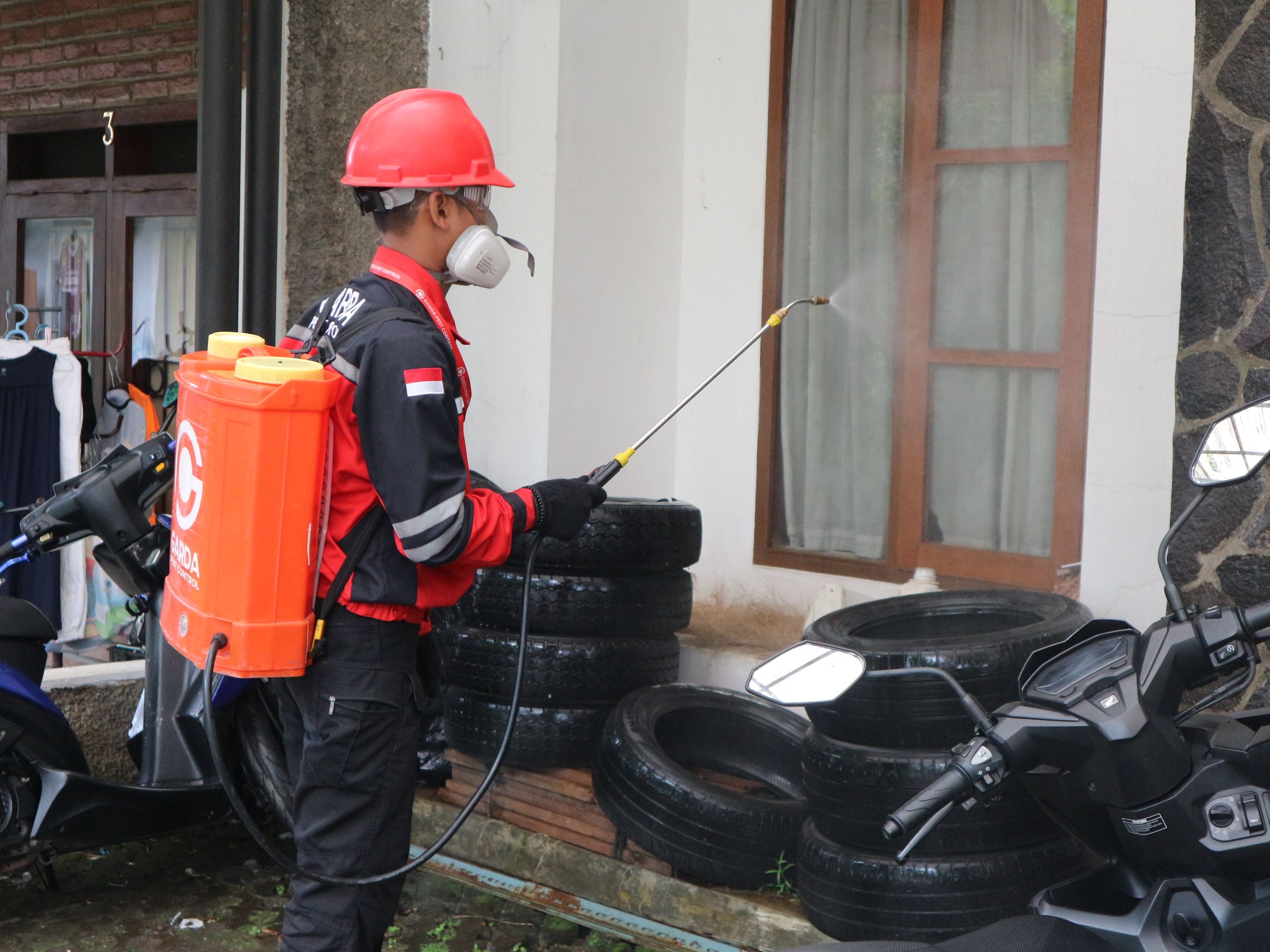
The nest is treated by our technicians to the plan you approved; your Up specialist watches, photographs and clears up. Preparation differs by home.
- Garden villas in Thao Dien and Saroma
- The survey walks the grounds: eaves, pergola, big trees, fences, outbuildings. Gardener and housekeeper keep clear of the nest. On the day a safety zone is set around it, windows are closed, and children, older relatives and pets stay elsewhere.
- Balconies in Thu Thiem, Sala and on Diamond Island
- We ask for the building's rules and handle registration with building management. A nest in a balcony corner is treated where access is safe; beyond that the quote states the alternative. Report a nest in a shared area to management as well.
- Multi-storey townhouses
- At The Global City, Lakeview City and Palm City the survey checks balconies, roof terrace and window frames on each floor and notes the way up to the roof.
Geckos and crickets: fewer indoors, and no poison
Geckos do no direct harm in the way insects do, and they eat mosquitoes, ants and small cockroaches. What bothers a household is droppings on walls, curtains and worktops. The aim is fewer geckos inside and fewer returning, not killing them. Insects multiply fastest in hot, rainy weather, most of all around garden villas and homes near the river, and geckos follow their food.
- Cut the food supply
- Geckos gather at lights because flying insects do. Fewer balcony lights, insect screens and control of mosquitoes and cockroaches reduce them noticeably.
- Seal the ways in
- Door gaps, gaps round aircon pipes, holes through walls, the space behind cabinets and picture frames. The Up specialist lists each one in the Up Report and advises sealing or mesh.
- Deter, catch and release
- Safe deterrents, and release outdoors where possible. We do not use poison bait for geckos indoors, to avoid any risk to young children and pets.
- Clean the traces
- Droppings are wiped from walls, curtains and cabinets; old marks on fabric curtains may need the curtains washed.
- Crickets
- They like damp, dark places such as drain chambers, paving gaps and planters. Outdoors, shelter is cleared, drain covers kept shut and the area treated by our technicians with permitted products; indoors, door gaps are sealed.
- Guide: geckos in the house
- Whether they are harmful, why they come in, and how to keep them out.
What decides the cost in District 2
There is no single rate, because every nest and every house is different. A nest that is easy to reach can be quoted from photos or video. A nest high up or inside a wall, or geckos and crickets through a whole house, needs a survey on site, which is free. The all-inclusive quote is given in writing before any work and does not change unless you agree in writing.
- Species and nest size: wasp, hornet or honeybee; newly started or large.
- Height and access: ground-floor eaves, a high balcony, a roof, a tall tree; a fixed ladder or railing in place, or lifting equipment needed.
- Position: in the open, or in a wall cavity, ceiling or service duct that must be opened and sealed again.
- Geckos and crickets: one room or the whole house and garden, and how many entry points to record.
- Follow-up and warranty: the visits agreed and any warranty terms for the method are in the quote; we contact you when a visit is due and record the findings in the Up Report.
International residents: English, registration, access, payment
Everything can be arranged in English, from enquiry to Up Report. Tell us when booking if you would like an English speaker at the house; if we cannot arrange that, we let you know in advance and help by phone or message.
- Building or compound registration
- Many apartment buildings ask residents to register outside staff beforehand, and compounds have a gate office. We send the Up specialist's name and photo and the technicians' details for you to hand in.
- If you are out
- You can leave a key with building management, reception or family; only the assigned specialist handles it, times are recorded and it is never copied. The walk-through can be by video call.
- Payment
- After the walk-through, by bank transfer or cash; a deposit for a larger job is stated in the quote. Invoices are issued on request under Vietnamese regulations.
Until we arrive, afterwards, and how to book
- Do not poke, burn, hose or spray the nest: the colony can be provoked, and a flame near a roof or trees is a fire risk.
- Close nearby windows and balcony doors, keep children and staff away, bring pets indoors.
- If someone is stung, move them away from the nest. For many stings, difficulty breathing, heavy swelling or dizziness, call 115 or go to a medical facility at once.
- Afterwards: check eaves, balconies, window frames and garden trees each dry season; seal wall cavities, roof gaps and unscreened vents; keep bins closed and do not leave sweet drinks, ripe fruit or pet food outside.
- To book, send a photo taken from a safe distance to 0968 726 135 on WhatsApp or Zalo, with your compound or street name. The written plan states the safety conditions, the area to avoid, when it can be used again, and the price.
- Changing or cancelling is free with 24 hours' notice; later than that the fee is 30%.
What does UpClean's wasp, bee & gecko control include?
- Survey: species, nest size, height and safe access
- Where geckos and crickets hide and get in
- Written plan with safety conditions and re-entry times
- Nest treated by UpClean's own technicians in protective gear
- Nest removed and the area cleaned
- Humane gecko deterrence and catch-and-release; no poison baits indoors
- Advice on sealing gaps, screens and lighting
- Gecko droppings cleaned from walls and surfaces, with an Up Report
Written by the UpClean technical team, reviewed by Trần Nguyễn Hữu Nhật — Founder of UpClean.