District 7 by ward: where we work regularly and where we confirm first
What people call District 7 has been four wards since 1 July 2025, under Resolution 1685/NQ-UBTVQH15: Tan My, Tan Hung, Tan Thuan and Phu Thuan. A ward is now the city's basic local unit. Phu My Hung, 433 hectares in all, sits within Tan My and Tan Hung.
Our technicians work regularly in Tan My and Tan Hung; in Tan Thuan and Phu Thuan a booking is taken after the time slot has been confirmed. Surveys and treatment fall between 07:00 and 20:00, the hour is fixed only once safety has been assessed, and nests are usually treated when the colony is least active.
- Tan My
- Phu My Hung's villas and townhouses with gardens, the area round Crescent Lake, Crescent Mall and SECC, and the Midtown and Riviera Point apartments.
- Tan Hung
- Sunrise City, twelve towers of 31 to 35 storeys on Nguyen Huu Tho; the Him Lam area beside Kenh Te canal; the streets round SC VivoCity and RMIT.
- Tan Thuan and Phu Thuan
- Eco Green Saigon and the townhouse rows along Huynh Tan Phat and Nguyen Van Linh; Q7 Saigon Riverside and the riverside residential areas. Please contact us first.
Low density, dense planting, a long wet season: why District 7 homes meet wasps, geckos and crickets
Phu My Hung leaves most of its land open. Nguoi Do Thi magazine (2023) gives a building density below 30% and about 8.9 m² of greenery per resident, so most homes have a row of trees, a flower bed or a pergola close by, with Crescent Lake, Kenh Te canal and smaller creeks beyond. Add a rainy season running from May to November and insects breed readily around gardens and homes near water.
The same greenery offers wasps a branch or an eave to hang a nest from and crickets a hiding place under planters and at the foot of trees, while geckos follow insects to the lights.
Villa eaves, townhouse roof terraces, tower balconies: how each nest is reached
We survey before we set a date. A wasp or hornet colony can attack all at once if its nest is touched, and stings are more dangerous to small children, the elderly and people with allergies. Where the nest sits and how it can be reached settle the method.
- Villas in My Kim, My Thai and Nam Vien
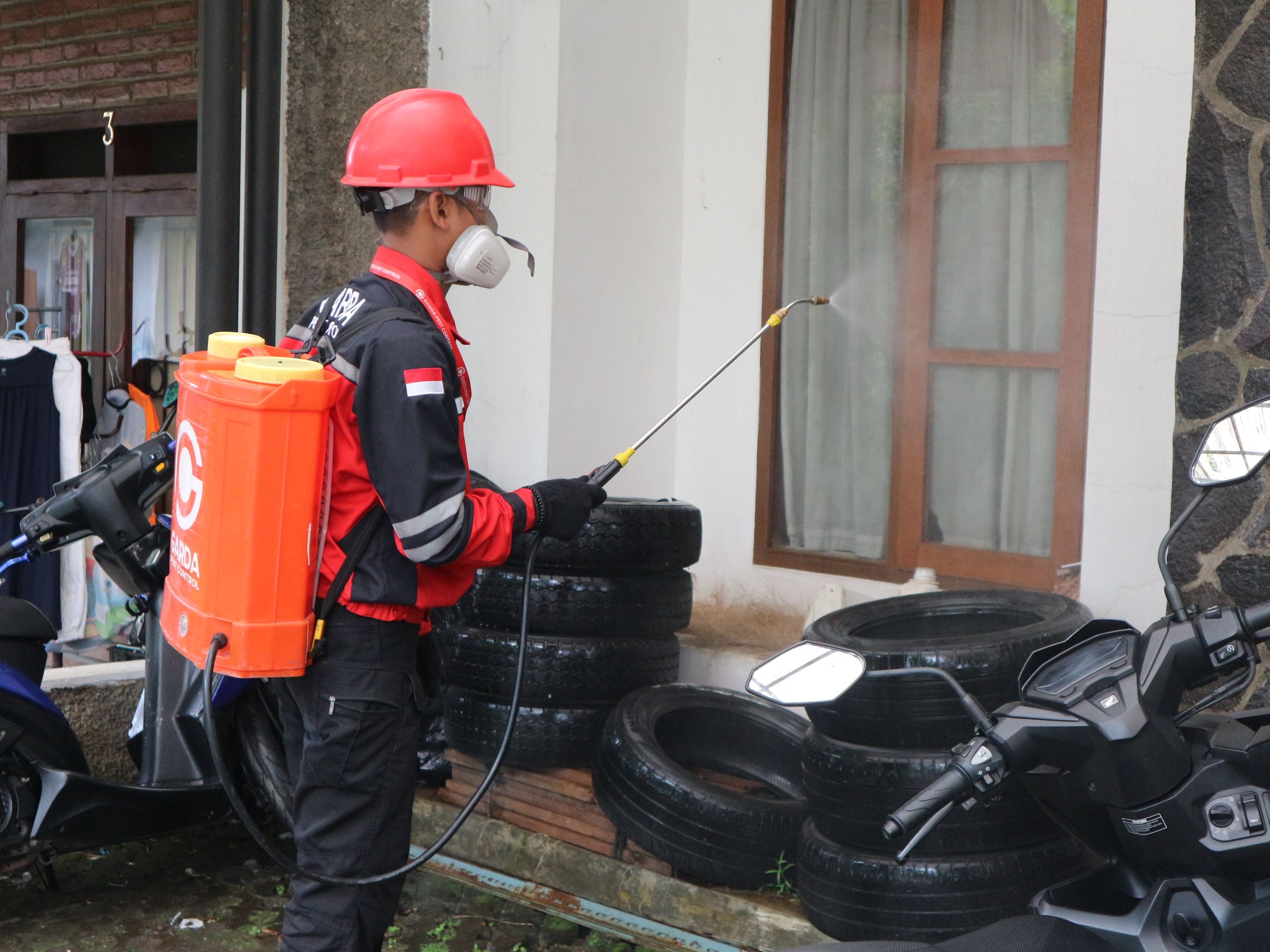
- A nest under ground-floor eaves or on a low branch is easy to reach: a technician in protective gear treats it, waits until the colony has stopped moving, then removes it. One in a tall tree or on the roof is handled only if a fixed ladder, a railing or a working platform makes access safe, with a harness where needed.
- Townhouses and shophouses
- The survey covers the roof terrace, rear balcony, back yard and upper window frames. Show us the way up to the roof so the technicians can judge access.
- Apartments at Sunrise City, Midtown and Riviera Point
- A nest in a balcony corner that can be reached safely is treated after registration with building management. On a high balcony where safety cannot be assured, the quote sets out the alternative, for example access with dedicated lifting equipment.
- Wall cavities, ceilings, service ducts
- The technicians trace where the colony goes in and out. A ceiling hatch or duct cover is opened only if you agree, and the opening is sealed afterwards.
- Honeybee colonies
- Left in peace they are less aggressive. If conditions permit, the whole colony is moved, not destroyed.
Wasp, hornet or honeybee: what to look at
The danger and the method both depend on the species. Stand well back and take one photo; that usually gives the technicians enough for a first opinion.
- Wasps: a slender body with a pinched waist, yellow with black. The nest resembles a paper umbrella or a round ball hung from eaves, a branch or a window frame.
- Hornets and ground-nesting wasps: larger. Certain species nest in a hollow tree, a wall cavity or garden soil, and the nest keeps growing.
- Honeybees: small, furry, brownish gold. Their nest is stacked sheets of wax, most often in a wall cavity, a roof or an old wooden box.
- Guide: wasp and bee nests near the house
- Telling them apart, first steps, and the point at which to call for removal.
From photo to nest removed: five steps, and what not to try yourself
- Never prod the nest, set fire to it, or turn a hose or an insect spray on it: a provoked colony may attack, and fire beside a roof or trees can spread. Shut the nearest windows and balcony doors and keep children, staff and pets away.
- After a sting, leave the area at once. Trouble breathing, marked swelling, dizziness or many stings mean calling the emergency number 115 or going straight to the nearest medical facility.
- 1. Photos and survey
- The survey records species, position and size of the nest, height and safe access; for geckos and crickets, where they shelter and get in.
- 2. Plan and quote
- In writing: the method, the safety conditions, the area to keep out of, when it can be used again, and the all-inclusive price.
- 3. Preparing the area
- Windows are shut, children, older people and pets move elsewhere, and a safety zone is marked round the nest.
- 4. Treatment
- Our technicians follow the approved plan, using products permitted in Vietnam; the Up specialist observes and takes photos.
- 5. Clearing up and Up Report
- The nest comes down, dead insects are collected, the spot is cleaned, and you receive prevention advice with before-and-after photos.
Geckos and crickets in apartments and townhouses: reduced, never poisoned
Geckos eat mosquitoes, ants and small cockroaches and cause no direct harm of the kind insects do. The nuisance is their droppings on walls, curtains and worktops. We do not set out to kill them; we make them fewer and less likely to return.
- Less food: insects fly to light and geckos gather there to hunt. Use fewer balcony lights, fit insect screens and keep mosquitoes and cockroaches under control.
- Fewer ways in: gaps at doors and round aircon pipes, holes through walls, the space behind wardrobes and picture frames. Each is noted in your Up Report.
- Humane deterrence, with catch-and-release where possible. No poison bait is used for geckos indoors, because of the risk to small children and pets.
- Cleaning: droppings are wiped from walls, curtains and cabinet tops; long-stained fabric curtains may need washing.
- Crickets prefer damp, dark spots (drain chambers, paving gaps, tree bases, planters) and come to lights after dark. Outside, leaf litter and heaps of brick are cleared, drain covers kept closed and the area treated by our technicians with products registered in Vietnam; inside, door gaps are sealed and corners vacuumed.
- Guide: geckos in the house
- Are they harmful, why they come in, and how to keep them out.
How the price is arrived at in District 7
No two nests or houses are alike, so we set no standard rate. Photos and video may be enough to quote for a nest that is easy to reach. For one high up or inside a wall, or when geckos and crickets are all through the house, we survey on site at no charge. The all-inclusive price is sent in writing before treatment and stays as it is unless you agree a change in writing.
- Species and size
- Wasp, hornet or honeybee; a new nest or an established one.
- Height and access
- Ground floor, high balcony, roof or tall tree; a fixed ladder or railing already there, or lifting equipment required.
- Position
- Exposed, or within a wall cavity, ceiling or service duct to be opened and closed up again.
- Geckos and crickets
- One room, or the entire house and garden; the number of entry points to log.
- Follow-up and warranty
- Follow-up visits and any warranty terms are stated in the quote. We get in touch when a visit is due and keep the findings in your Up Report.
Managed towers, guarded estates and international residents: before the day, and booking
Many District 7 apartment buildings require outside companies to register ahead, show identification and use the service lift; some limit construction-type work at weekends, and many villa and townhouse estates have guards who log visitors. We ask about your building's rules in advance.
- You receive the Up specialist's name and photo and our technicians' details for building management or security.
- Enquiries, quotes, booking confirmations and the Up Report can all be in English. Note it when booking if you want an English speaker on site; if we cannot arrange one, we tell you in advance and support you by phone or message.
- Mention children and pets at the survey; while a nest is treated they stay in a closed room.
- Payment follows the walk-through, by bank transfer or cash; invoices are issued on request under Vietnamese regulations.
- To book, message 0968 726 135 on WhatsApp or Zalo with a photo taken from a safe distance and your project name or address. Tan Thuan and Phu Thuan need a time slot confirmed first.
- A booking can be moved or cancelled free of charge up to 24 hours ahead; within 24 hours the fee is 30%.
What does UpClean's wasp, bee & gecko control include?
- Survey: species, nest size, height and safe access
- Where geckos and crickets hide and get in
- Written plan with safety conditions and re-entry times
- Nest treated by UpClean's own technicians in protective gear
- Nest removed and the area cleaned
- Humane gecko deterrence and catch-and-release; no poison baits indoors
- Advice on sealing gaps, screens and lighting
- Gecko droppings cleaned from walls and surfaces, with an Up Report
Written by the UpClean technical team, reviewed by Trần Nguyễn Hữu Nhật — Founder of UpClean.
Sources
- Nghị quyết 1685/NQ-UBTVQH15 về sắp xếp đơn vị hành chính cấp xã TP.HCM năm 2025
- Chuyện ngập nhìn từ Phú Mỹ Hưng — Người Đô Thị (2023)
- Khí hậu, thời tiết TP.HCM — Cổng thông tin điện tử TP.HCM
- Phu My Hung — Overview (trang giới thiệu của chủ đầu tư)
- Quy định nội dung chủ yếu của bản nội quy quản lý, sử dụng nhà chung cư (Thông tư 05/2024/TT-BXD)