
Is it a wasp, a hornet or a honeybee?
The three differ in body shape and in the nest they build, and a photo taken from a safe distance is usually enough for a first identification. Do not go closer to check: wasps are easily provoked when someone approaches the nest.
| Insect | The insect and its nest |
|---|---|
| Wasp | Slender, with a narrow waist and yellow and black stripes. The nest is grey-brown, shaped like a paper canopy or a round ball, and hangs under eaves, on a balcony, a window frame or a branch, or on the outdoor unit of an aircon. |
| Hornets and ground-nesting wasps | Larger. Some species nest in a tree hollow, in a wall cavity or underground in the garden. The nest can grow quickly and may go unseen until someone treads on it or runs the mower over it. |
| Honeybee | A small, hairy bee, golden brown in colour. The nest is made of several layers of wax comb inside a wall cavity, a roof or a wooden crate. A colony is usually calmer when nobody disturbs it, and in many cases it can be moved instead of destroyed. |
When is a wasp nest dangerous?
A wasp nest becomes dangerous the moment it is disturbed. A wasp's sting does not stay lodged in the skin as a honeybee's does, so one wasp can sting several times, and a colony whose nest has been touched can attack as a group. The venom is more dangerous for young children, older people and anyone prone to allergic reactions.
The US National Institute for Occupational Safety and Health (NIOSH), part of the CDC, notes that people allergic to insect venom can go into anaphylactic shock, a severe, life-threatening allergic reaction that needs emergency care. Guidance on diagnosing and managing stings circulated by Nguyen Tri Phuong Hospital in Ho Chi Minh City classes more than 30 wasp stings in an adult, or more than 10 in a child, as severe. Apart from anaphylaxis, a large amount of venom can cause complications such as kidney failure, which need hospital treatment.
The position of the nest changes what can go wrong.
| Where the nest is | What to know |
|---|---|
| Hanging under eaves, on a balcony or on a window frame | The usual places for a wasp nest. The wasps are easily provoked when someone comes near, so the windows and doors beside it stay shut. |
| In the ground or in a tree hollow | Hard to spot until a foot or a lawnmower finds it, and it can grow fast. |
| High up, on a roof or in a tall tree | The fall is the added danger. Falling from a ladder while under attack can be a very serious accident. |
| Inside a wall cavity, a ceiling or a service duct | The colony's way in and out has to be found before anything can be done. |
| Small and newly started | It may still have wasps inside, so it is not safe to take down without protective gear. |
What should I do when I find a nest near the house?
Keep people away from it, and collect what a professional needs in order to assess it.
- Keep your distance. Do not stand directly under the nest, shake the tree it hangs in, or mow or prune close to it.
- Close the windows and balcony doors nearest to the nest.
- Photograph the nest from a safe distance and note where it is and how high, so that it can be assessed before anyone arrives.
- If a single wasp flies around you, NIOSH advises staying calm and still, without swatting at it.
- If several attack, NIOSH advises covering your face and running indoors or into shade.
- Anyone who has had a severe allergic reaction to a sting should ask their doctor about carrying prescribed emergency medication.
What should I never do to a wasp nest?
Do not act on the nest yourself. Each method below either provokes the colony or leaves the nest where it is, and no repellent has been shown for certain to make an established colony leave.
| Method | Why it fails or harms |
|---|---|
| Burning or smoking the nest | Very dangerous. The wasps are provoked and attack the person holding the flame, and fire catches easily on the roof, electrical wiring, curtains and dry plants. |
| Hosing it, or bagging it at night | The nest breaks easily and the wasps pour out while you are standing on a ladder or a chair. |
| Poking it, knocking it down or using an insect spray | The colony can be provoked into attacking. With a nest high up, the fall that follows the stings can be the more serious injury. |
| Hanging a fake nest | Widely promoted as a deterrent, but there is no clear evidence that it works. It does not replace regular checks. |
| Sweet-drink bottle traps | They catch some wasps, but the sweet bait also draws more of them to the area. If you use one, put it well away from doors, seating and the places where children play. A trap does not remove the nest. |
How do I keep children and pets away from the nest?
Tell everyone in the household where the nest is, and keep the animals indoors.
- Ask children, older relatives and household staff to keep away from that part of the house or garden.
- Bring pets indoors, and do not let them bark at the nest or play around it.
- When eating outdoors, keep sweet drinks covered and look into cans and glasses before drinking.
- For work in the garden, NIOSH advises against brightly coloured or floral-patterned clothing and scented products.
- Mention children and pets before the survey. While a nest is being treated they stay in a closed room, and the time when the area can be used again is written in the plan and confirmed at handover.
What should I do if someone is stung?
Move the person away from the nest first. Hospitals advise that if the sting is still in the skin, you ease it out gently without squeezing, because squeezing can spread the venom; then wash the area with soap and clean water and apply a cold compress to ease pain and swelling. Do not put leaves on the sting, and do not prick or squeeze it. Give medicine only as a health professional directs, not on someone's say-so.
- Call the emergency number 115 at once for difficulty breathing, wheezing, a choking feeling, swollen lips or eyelids, hives over the whole body, vomiting, stomach pain, dizziness, drowsiness or fainting.
- Go straight to a medical facility after many stings, after a sting to the head, face or neck, or when the person stung is a young child, an older person or someone with an underlying illness.
- Over the following days, have the person examined again if the urine turns dark, there is little of it, or they are very tired: these can be signs of a complication.
Can I stop wasps nesting near the house?
You can make it less likely. What helps is a house that offers wasps less food and shelter, and finding a new nest while it is still small. After a nest has been removed, wasps can build again in a similar spot if nothing there has changed.
- Keep bins closed and wash them from time to time. Do not leave sweet drinks, ripe fruit or pet food outdoors for long.
- Every few weeks, look over the eaves, balconies, window frames, aircon outdoor units and garden trees, above all in the dry season and at the start of the rains.
- Seal wall cavities, gaps in the roof and ventilation holes that have no mesh.
- Clear wooden crates, old pots and unused items from the roof terrace and attic.
- Fit insect screens to windows that are often open, and check the screens before the season begins.
When does nest removal need a professional?
In practice, every wasp nest should be handled by someone with proper protective gear. That applies most of all when the nest is high up or inside a wall cavity, ceiling or service duct; when it is already large, or wasps fly into the house several times a day; when there are young children or anyone with an allergy at home; or when you are not sure which insect it is. How the work is done depends on where the nest is.
| Nest | What removal involves |
|---|---|
| Low and within reach: ground-floor eaves, a low branch, a balcony corner | A technician in protective gear treats the nest and takes it down once the colony is no longer active. |
| High up: roof, upper-floor balcony, tall tree | Possible only with safe access such as a fixed ladder, a railing or a working platform, with a safety harness where needed. |
| In a wall cavity, ceiling or service duct | An inspection hatch or duct cover may have to be opened, with the owner's consent, and the entry point is sealed afterwards. |
| Honeybees | Where conditions allow, the colony is relocated instead of destroyed. |
What UpClean will and will not do, and how to book
UpClean assesses safety before it gives a date. Send photos or a video of the nest, taken from a safe distance, to 0968 726 135 on WhatsApp or Zalo. A nest that is easy to reach can be quoted from those; one high up or inside a wall needs a survey on site, which is free. UpClean does not promise same-day removal before the nest and the way to reach it have been assessed. It works on a high nest only where there is safe access; where that cannot be assured, the written quote says so and sets out the alternative, which may be a company with dedicated lifting equipment.
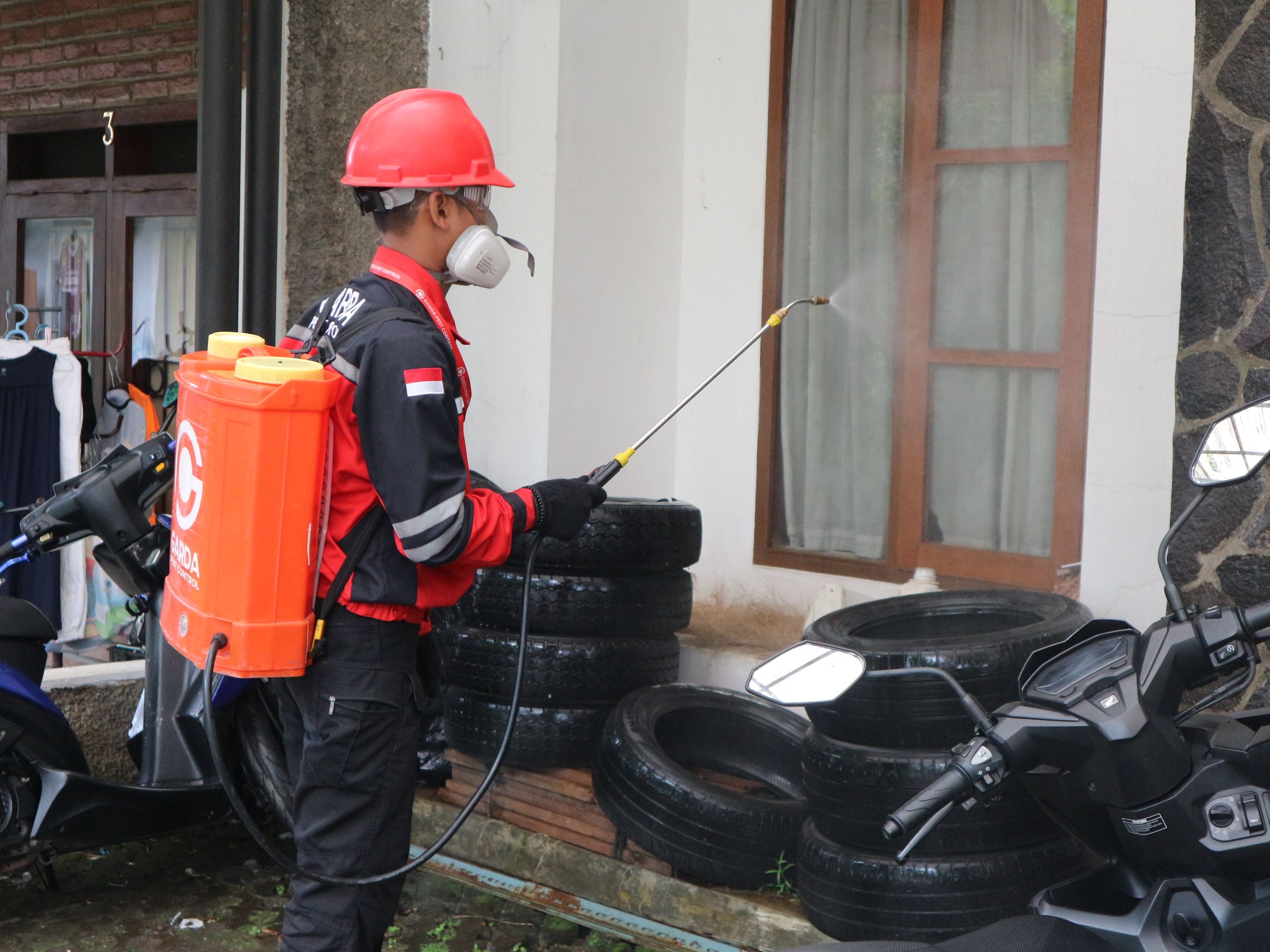
UpClean's own pest-control technicians treat the nest in protective gear, following a written plan that states the safety conditions, the area to keep clear of and the time when it can be used again. Treatment is usually scheduled for a time when the colony is less active, and a safety zone is set up around the nest. For honeybees, relocation is preferred where conditions allow. An Up specialist, one of UpClean's identity-verified and trained staff, records the work in photos; afterwards the nest is taken down, the dead insects are collected and the spot is cleaned. UpClean has declared its eligibility to provide pest-control services as required by regulation; the declaration and product information are available on request.
You then receive an Up Report by WhatsApp or Zalo, with before-and-after photos and advice on keeping wasps from nesting there again. The enquiry, the quote and the report can all be in English, and the lines are open from 7:00 AM to 8:00 PM every day. The price is all-inclusive, agreed in writing and changed only with your written consent. The specialist's name and photo reach you before the visit; pass them to building management if your building asks residents to register outside staff.
- Wasp, bee and gecko control
- The service page: scope, cost factors and areas covered.
- Cockroaches, ants and geckos in Saigon apartments
- For the pests that live indoors.
- Pest control
- The general service for insects inside the home.
- Book a survey
- Send the request online.
- Contact UpClean
- By phone or message, and where the office is.
Frequently asked questions
Can I remove a small wasp nest myself?+
It is not advised without protective gear, even for a nest that has only just been started, because wasps may still be inside. Photograph it from a distance and ask for advice.
Will wasps come back after the nest is removed?+
They can build a new nest in a similar spot if conditions there are still favourable. Sealing cavities and gaps, and checking the eaves and balconies every few weeks, limits that.
Do honeybees nesting in a wall have to be killed?+
Not always. A honeybee colony is usually calmer when left undisturbed, and in many cases it can be relocated. The method is proposed after a survey.
How many wasp stings are dangerous?+
Guidance circulated by Nguyen Tri Phuong Hospital classes more than 30 stings in an adult, or more than 10 in a child, as severe. A single sting can still cause anaphylactic shock in someone who is allergic, so watch the person closely.
Can UpClean remove a wasp nest today?+
UpClean does not promise same-day removal before safety has been assessed. The date is set once the technicians have seen the photos or surveyed the nest. Until then, keep the doors and windows near it closed and stay away from the area.
How much does wasp nest removal cost in Ho Chi Minh City?+
UpClean has no standard rate. The price depends on the species, the size of the nest, its height and how it can be reached, whether it is in the open or inside a wall, ceiling or duct, and the follow-up visits agreed. A written, all-inclusive quote is sent before any work.
Related guides
- German cockroaches: how to identify them, why sprays fail, and how to get rid of them
- Woodworm in furniture: the signs, how to tell it from termites, and how to treat it
- Geckos in the house: are they harmful, why they come in, and how to keep them out
- Termites in walls: do they eat brick and concrete, what do they eat, and what to do before a survey
- Termite nest in the house: what it looks like, where it is, how a colony works and what to do
- Is termite treatment safe for children and pets? Re-entry time, fish tanks, ventilation and what to get in writing
- How to choose a termite control company in Ho Chi Minh City: six checks, the paperwork and the warning signs in a quote
- Termites in Saigon houses: the signs, what treatment involves, and what to ask before you sign
