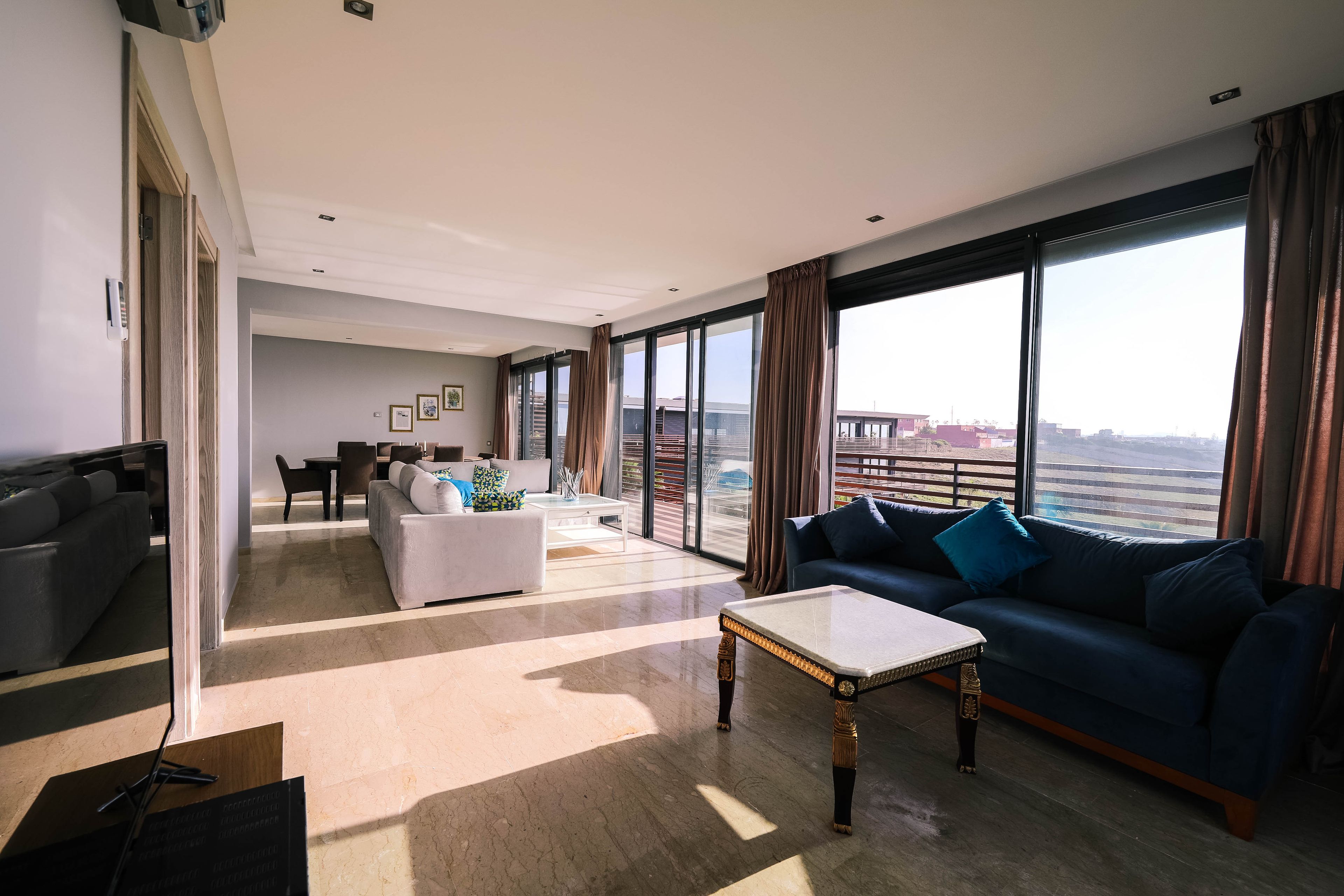
District 2 today, and where we polish stone floors
Ho Chi Minh City replaced its districts with wards on 1 July 2025 (Resolution 1685/NQ-UBTVQH15); a ward is the local administrative unit that now follows the street name in an address. The area people still call District 2 is three wards: An Khanh, Binh Trung and Cat Lai.
Our office is at 72 Nguyen Co Thach in Sala, inside An Khanh ward. Surveys and polishing are scheduled regularly in An Khanh and Binh Trung, 07:00 to 20:00, seven days a week. For Cat Lai, contact us first.
- An Khanh ward — regular
- Formerly Thao Dien, Thu Thiem, An Loi Dong, An Khanh and part of An Phu. Stone floors are common in the garden villas along Nguyen Van Huong and Quoc Huong, the Thao Dien compounds, and the Saroma villas and SariTown townhouses in Sala.
- Binh Trung ward — regular
- The SOHO townhouses at The Global City, the townhouses and semi-detached villas of Lakeview City and Palm City, and apartments at Diamond Island and Estella Heights.
- Cat Lai ward — by arrangement
- Formerly Thanh My Loi and Cat Lai, with Vista Verde, Feliz en Vista and riverside townhouses.
Why stone floors in Thao Dien villas and Sala houses go dull
Sand does most of the damage. Many Thao Dien villas have natural stone in the hall and living room, which open onto a veranda, a lawn and stone-paved garden paths. Fine grit carried in on shoes scratches stone, marble most of all, so the first dull track usually appears between the garden door and the living room and around the foot of the stairs.
Damp comes second. Tuoi Tre newspaper (June 2025) describes Quoc Huong, Nguyen Van Huong and Thao Dien streets as low-lying, with ageing drains: when heavy rain meets a high tide, water can stand 0.15–0.3 m deep for one to two hours. Water should not be left standing on stone or in the grout, so in these houses the survey checks water stains and whether the ground-floor stone should be sealed.
Sala is newer: the Saroma villas and the townhouse rows have wide glazing and large-format stone floors, and the concern is fine dust from the construction sites that remain in Thu Thiem, Sala and The Global City. Ask for a survey when:
- The hall, the walkways and the foot of the stairs look duller than areas few people cross.
- Drops of water soak in quickly and darken the stone.
Marble, granite or terrazzo: the stone decides the method
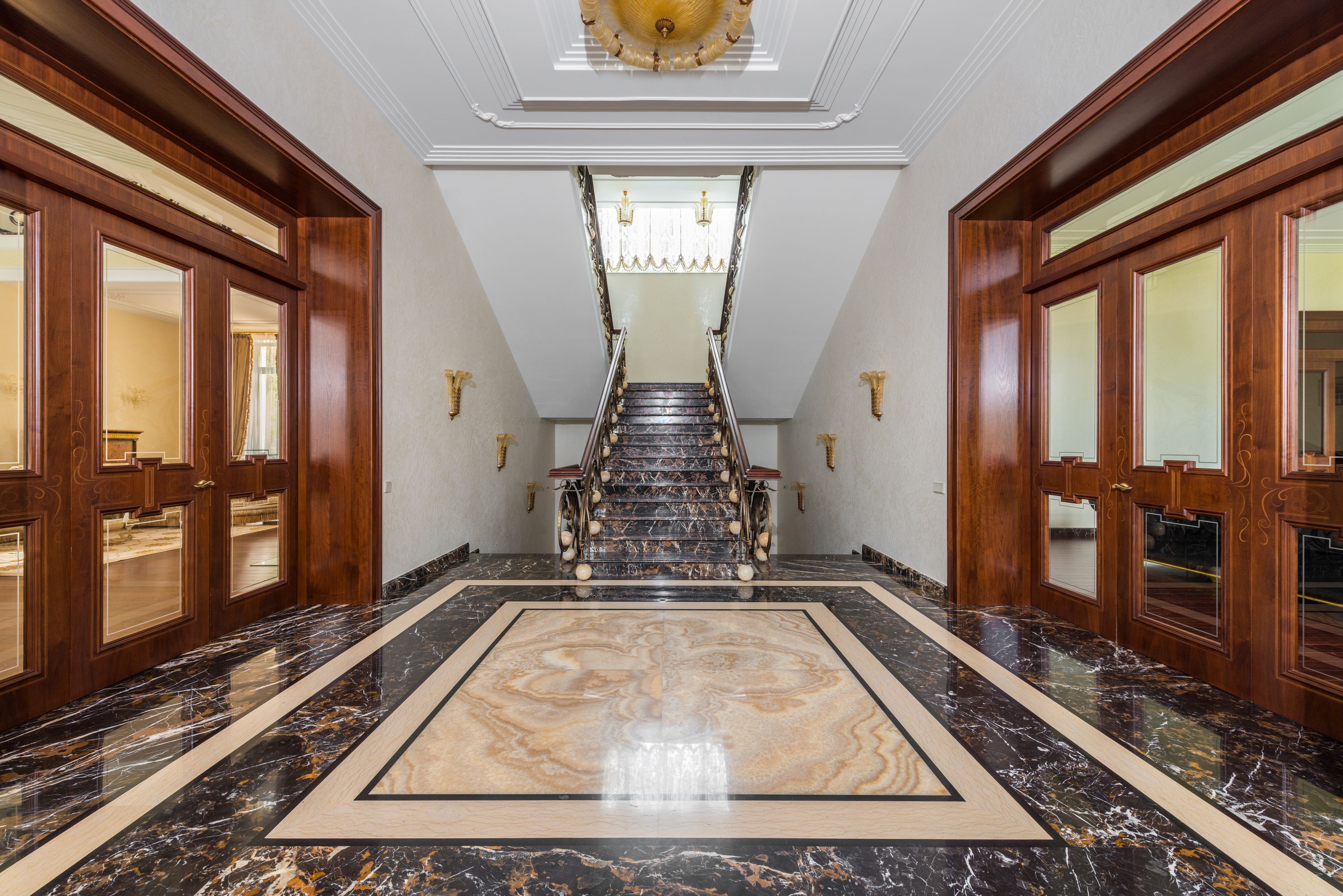
Identifying the stone is the first job of the survey, because a product that is harmless on granite can take the shine off marble. A plan can contain up to five steps, and few floors need all of them: deep cleaning; honing, which is wet grinding with diamond pads to take off a scratched or etched layer; polishing; crystallisation; and sealing. Honing is done only when needed, because every pass removes a thin layer of stone. A sealer slows staining, but it wears with use and has to be reapplied.
| Stone | What it means for polishing |
|---|---|
| Marble | Calcium-based, about 3–4 on the Mohs hardness scale. Grit scratches it, and lemon, vinegar and acidic cleaners etch it into dull marks. It responds well to polishing and to crystallisation, in which a specialist solution reacts with the stone under the machine to form a glossier surface. |
| Granite | Mainly silicate minerals, about 6–7 on the same scale, and less affected by household acids. It is harder to scratch and slower to hone. Granite is not crystallised: it is polished with dedicated materials and then sealed. |
| Terrazzo | Stone chips, usually marble, set in a cement or resin binder and ground flat. Where the chips are calcium-based it is treated much like marble and can be crystallised. |
| Tiles and other materials | Ceramic and porcelain tiles get their shine in the factory and belong to our tile and grout service. For engineered stone, travertine or limestone, send photos first. |
The test patch: what you approve, and what polishing cannot fix
You see the result on your own floor before you agree to the job. The same procedure gives different results on two floors, depending on the age of the stone, its wear and earlier treatments, so the specialist carries out the proposed plan on one small area beside an untreated part. Once you approve it, in daylight and under your own lights, its shine is the standard the whole job is signed off against; if it is not what you want, the plan is changed first.
The patch also shows the limits. Stains that have soaked in deep may only fade, and cracks, broken tiles and colour differences between tiles may not be fully corrected. The specialist points each one out and photographs it before you decide. For 48 hours after you receive the Up Report, our before-and-after photo record of the job, any area that does not match the approved patch is treated again free of charge.
What it costs in District 2, and why there is no price list
There is no rate per square metre, and we do not name a figure before seeing the floor: a living room that is only dull needs a deep clean and a polish, while a hall with deep scratches has to be honed through several grits before it is crystallised and sealed.
The home survey is free, and photos or a video can be sent first. The written, all-inclusive quote lists each step, the area and the working time, and changes only if you agree in writing. These points shape it:
- Area and layout: several separate stone areas take more time for moving machines and masking than one continuous floor of the same size.
- Stone, condition and finish: granite usually takes longer to hone than marble or terrazzo, a deeply scratched or etched floor needs more steps than a dull one, and crystallisation and sealing may or may not be needed.
- Access, protection and hours: the floor level, the lift, the furniture to be moved, the timber floors and cabinets to cover, and the working hours your building or compound allows.
- Stone stairs
- Treads, risers and landings are worked mostly by hand and with hand-held machines, so they take longer than flat floor; stair polishing has its own listed prices per step.
- Stone worktops
- Worktops and basin tops can be treated in the same job; our guide covers their daily cleaning, stains and resealing.
Apartments, penthouses and SOHO townhouses: getting the machines in
Polishing brings machines, water and noise, so building management usually treats it as contractor work. Most premium apartment buildings in District 2 have their own rules for contractors, and many require registration beforehand, ID at the lobby, the service lift for equipment and fixed working hours; some restrict weekends, and a few ask for a works deposit, refunded if nothing is damaged. We ask first and plan inside the permitted hours.
- Apartments, penthouses, duplexes
- The slurry, the mix of water and stone fines that honing produces, is vacuumed up as the work goes on and never runs into a corridor or common area.
- SOHO townhouses at The Global City
- Several storeys, usually with narrow stairs and few routes for equipment. The specialist checks the way up at the survey, and the stairs and main walkways are covered before any machine is moved.
- Villas in Thao Dien compounds
- Guards log everyone who enters; the team follows their directions on parking and on outdoor water and power.
During the work and afterwards: dust, noise, furniture, drying and care
- Dust and noise
- We hone wet, which keeps dust down, and collect the slurry continuously. The machines do make some noise, so work is booked at hours that suit your household and your building's rules.
- Furniture
- The household does not need to move out or empty the room. The specialist photographs where things stand, moves furniture within the agreed scope and puts it back; put fragile and valuable items away beforehand.
- Walking on the floor
- You can walk on it gently once it is dry. Where a sealer has been applied, your specialist tells you before handover how long to keep the area dry and to avoid moving heavy furniture.
- Keeping the shine
- Main living areas are usually maintained once a year. Mats at the garden and garage doors, a vacuum before mopping and a pH-neutral cleaner keep the shine; vinegar, lemon and acidic bathroom cleaners dull marble.
For international residents: English, registration, keys, payment and booking
- English
- The enquiry, the written quote, the booking confirmation and the Up Report can all be in English. An English-speaking specialist in the home is something to request when you book; when none is free we tell you beforehand and back the visit up by phone or message.
- Who comes
- Up specialists are identity-verified and trained to the Up Standard, our working procedure. Before each visit you receive the specialist's name, photo and contact number.
- If you are away
- A key can be left with building management, reception or family; only the assigned specialist handles it and keys are never copied. The walk-through can be done by video call.
- Payment and booking
- Payment is due after the walk-through, by bank transfer or cash; a larger job may need a deposit, stated in the quote, and invoices are issued on request. To book a survey, message 0968 726 135 on WhatsApp or Zalo with photos of the floor and its approximate area.
What does UpClean's stone floor polishing include?
- Assessment of stone type, shine, scratches, stains and grout
- A small test patch so you can approve the finish before we continue
- Skirting, kitchen cabinets, timber floors, rugs and nearby furniture protected
- Deep cleaning and stain removal on stone and grout lines
- Diamond honing through progressive grits where the surface is scratched or uneven
- Polishing or crystallisation to the finish that suits each stone
- Protective sealing, slurry collection, clean-up and care guidance
Written by the UpClean technical team, reviewed by Trần Nguyễn Hữu Nhật — Founder of UpClean.
Sources
- Nghị quyết 1685/NQ-UBTVQH15 về sắp xếp đơn vị hành chính cấp xã TP.HCM năm 2025
- Khí hậu, thời tiết TP.HCM — Cổng thông tin điện tử TP.HCM
- Điều gì khiến ‘phố nhà giàu’ Thảo Điền cứ mưa là ngập? — Tuổi Trẻ (06/2025)
- Quy định nội dung chủ yếu của bản nội quy quản lý, sử dụng nhà chung cư (Thông tư 05/2024/TT-BXD)