District 7 today: four wards, and where termite surveys are scheduled
Four wards, the smaller local units that replaced districts across Ho Chi Minh City on 1 July 2025, now cover the former District 7: Tan My, Tan Hung, Tan Thuan and Phu Thuan (Resolution 1685/NQ-UBTVQH15). Phu My Hung, a planned urban area of 433 hectares, lies in the first two. Title deeds often carry the former ward names; the estate name or house number is all we need.
Sites in Tan My and Tan Hung are surveyed regularly, 07:00 to 20:00 every day. For Tan Thuan or Phu Thuan we agree a time slot first.
- Tan My ward
- Once Tan Phu ward plus the remainder of Phu My: Phu My Hung's villas and garden townhouses and the streets round Crescent Lake, Crescent Mall and SECC.
- Tan Hung ward
- Once Tan Phong, Tan Quy, Tan Kieng and the old Tan Hung: Him Lam, on the Kenh Te canal, and the streets near SC VivoCity and RMIT University.
- Tan Thuan ward — by arrangement
- Once Binh Thuan, Tan Thuan Dong and Tan Thuan Tay, with rows of townhouses on Huynh Tan Phat and Nguyen Van Linh.
- Phu Thuan ward — by arrangement
- Once Phu Thuan and part of Phu My, with residential areas along the river.
Former marshland, canals and greenery: the ground under District 7 houses
District 7 is mostly low ground along the river. Over three decades ago the south of the city was thinly populated marsh, Nguoi Do Thi magazine (2023) recalls, and it remains low and open to high tides. Phu My Hung was laid out so that it seldom floods, with tide gates, less than 30% of the land built on and roughly 8.9 m² of greenery per resident, by the same account. All that greenery and water also keeps the soil round a foundation moist.
Moist soil suits the local termite. The Asian subterranean termite is native to Southeast Asia; University of Florida (UF/IFAS) material says its colonies need wood and damp soil to get established, forage through mud tubes and can form secondary nests in wall voids. With rain from May to November, even a new house can be reached; a barrier put between soil and structure during the build limits that risk. Termites here tend to start from:
- Planters built against a wall, timber decking, pergolas and big trees near the house.
- The foot of ground-floor walls near the Kenh Te canal, the Saigon River or a creek, where the ground is damp all year.
- The joint of a wall shared by two townhouses, the space under the stairs and document stores.
What a termite protection system consists of
Concrete and brick are not food for termites, but expansion joints, fine cracks and pipe openings let them through to anything containing cellulose. Protection is therefore a series of layers, each tied to a point in the construction programme.
| Layer | Where and when |
|---|---|
| Barrier under the ground slab | Applied to the compacted ground and finished before the plastic sheet is laid and the concrete poured, with particular care where water pipes, drains and electrical conduit pass through. |
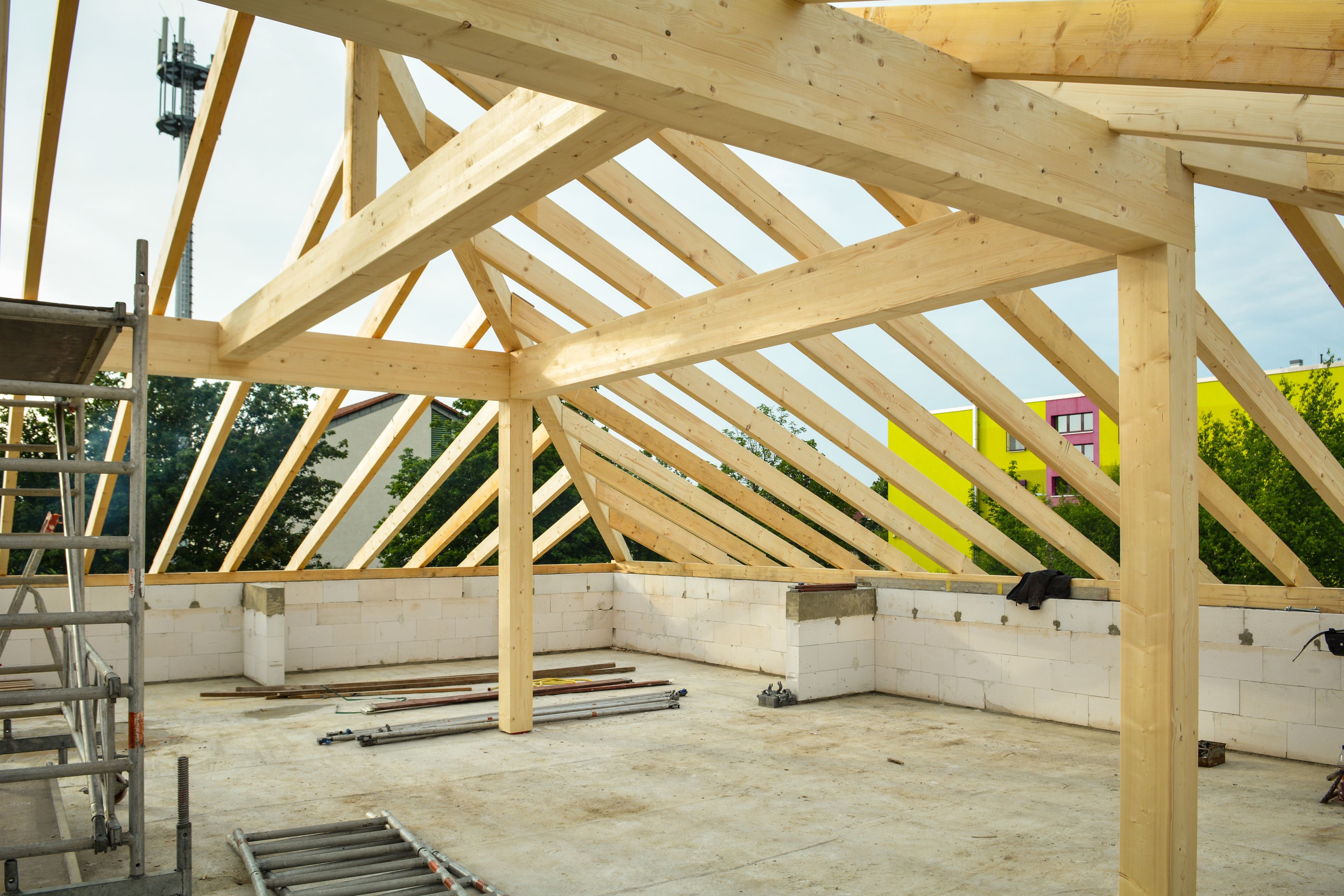
| Termite trench | A band of soil along the footings and outer walls, excavated and treated to stop termites arriving from outside; formed when the perimeter walls go up, to dimensions set in your plan. |
| Wall bases | The foot of each wall where it meets slab and soil, including any planter built against it, treated at the perimeter-wall stage. |
| Timber | Door frames, vents, timber stairs, floorboards, panelling, kitchen and built-in cabinets are treated before installation; formwork timber is covered as well. |
New plot, villa renovation, shophouse refit: when to call us
Phu My Hung has been settled for many years and many houses have seen long use, so we take on major renovations, with floors broken out and relaid, as well as new builds.
- A plot about to break ground
- Send the foundation drawings and the programme before the first day on site. The technicians look at the soil, have stumps and rotten wood removed and check the plot and the houses next door for nests. Land near the Kenh Te canal or the river in Phu Thuan should always have this check: active termites are treated first, then the foundation protection follows the programme.
- A villa in My Kim, My Thai or Nam Vien under major renovation
- When a floor is broken out, relaid or raised, the exposed ground can be treated before new concrete is poured. The garden is surveyed on the same visit: planters against the wall, decking, big trees.
- A townhouse or shophouse on Nguyen Van Linh, Ton Dat Tien or Nguyen Luong Bang
- Ground floors here are often showrooms, shops or customer-facing offices. During a refit the wall bases, door frames and timber panelling are treated before the interior goes in, and the wall shared with the neighbour is checked.
- A house already lived in
- It can still be given a barrier: a treated zone along the outside wall bases and small holes drilled in the floor or inside wall bases, sometimes with bait stations. This needs a re-entry time, when the area is left unused, and is agreed in writing first.
Owner, contractor, technicians, Up specialist: who does what
Some steps are possible only before a slab is poured or a wall plastered, so we follow the contractor's programme closely; fixed early, the dates hardly affect it. Many villa and townhouse estates in District 7 have guards who log every entry, so before each stage we send the Up specialist's name and photo and the technicians' details for security.
- Owner or project manager
- Sends floor plans, foundation drawings and the programme; tells us about any well, fish pond or vegetable garden near the works; approves the plan and the quote in writing.
- Contractor
- Hands over each area clean and dry, with no offcuts or roots; keeps workers out for as long as the technicians ask; leaves treated soil undisturbed until the concrete is poured; reports changes such as an added drain chamber or a moved pipe.
- UpClean technicians
- Treat the ground, trench, wall bases and timber at the agreed points, with products registered in Vietnam and applied as the label and the regulations require, and cordon off the area meanwhile.
- Up specialist
- Confirms each date, checks the warning signs, the cordon and the collection of empty packaging, then photographs the stage against the plan drawing and sends it to owner and contractor together.
How the quote for termite protection in District 7 is built
No price list is published. We read the drawings and visit the site without charge, then send an itemised, all-inclusive quote in writing; any addition needs your written agreement first. Five things set the price:
- Ground floor
- The slab area that needs a barrier layer.
- Footings and perimeter walls
- The length that needs a termite trench.
- Timber
- How many door frames, floorboards and panels are to be treated before fitting.
- Stage
- Alongside the contractor from the start, or added once the house is finished.
- Inspections and warranty
- The inspections after handover and the warranty terms; both depend on the plan and are stated in the quote.
Standards, the handover file and life after you move in
Two Vietnamese national standards apply directly: TCVN 7958:2017 to new buildings and TCVN 8268:2017 to buildings in use. The Ministry of Construction's standards portal shows TCVN 7958:2017 as in force, in place of the 2008 edition; it covers surveying for termites, designing the protection, and measures such as a foundation trench, a barrier under the floor and treated timber. Our technicians work from it; the design of the building remains your engineer's.
Once the house is finished, nothing under the slab or inside the walls can be seen. The Up Report, UpClean's written and photographic record, becomes the sole basis for inspection, warranty and later additions: a marked-up floor plan, dated and timed photos of every stage, the approved plan and quote, the warranty terms and a schedule of inspections, the key one after the rainy season. Pass it on if you sell, let or renovate. After you move in:
- Tell us before paving more of the yard, adding a planter or digging a new pipe run, in case the barrier needs making good.
- If you see a mud tube or hollow-sounding timber, photograph it and message us; please do not break it open or spray it.
International owners and project managers: English, payment, booking
- Working in English
- The enquiry, the plan, the quote, confirmations and the Up Report can be in English. For an English speaker on site, add a note when you book; if none can be arranged, you are told beforehand and helped by phone or message.
- Payment and invoices
- You need not attend each stage: the walk-through can be held by video call. Payment follows it, by bank transfer or cash; a larger job may need a deposit, set out in the quote. Invoices are available on request, for individuals and companies.
- Booking and changes
- Message 0968 726 135 on WhatsApp or Zalo with the drawings, the programme and the address. An appointment can be moved or cancelled free up to 24 hours before; after that the fee is 30%.
- Termite control in District 7
- For a house that already has mud tubes or damaged timber; these come before any long-term barrier.
What does UpClean's pre-construction termite protection include?
- Site visit and review of foundation and floor drawings
- Stage-by-stage plan and fixed written quote
- Treatment timed with slab pouring, wall building and timber installation
- Soil treatment under the ground-floor slab
- Perimeter termite trench around footings and outer walls
- Treatment of wall bases, door frames and timber before installation
- Up specialist on site at each stage with photo records
- Up Report with treated-area plan, photos and inspection schedule
Written by the UpClean technical team, reviewed by Trần Nguyễn Hữu Nhật — Founder of UpClean.
Sources
- Nghị quyết 1685/NQ-UBTVQH15 về sắp xếp đơn vị hành chính cấp xã TP.HCM năm 2025
- Chuyện ngập nhìn từ Phú Mỹ Hưng — Người Đô Thị (2023)
- Asian Subterranean Termite, Coptotermes gestroi — UF/IFAS Extension
- Khí hậu, thời tiết TP.HCM — Cổng thông tin điện tử TP.HCM
- Phu My Hung — Overview (trang giới thiệu của chủ đầu tư)