From District 3 to three wards: where we take mosquito surveys
District 3's addresses changed in stages: Vo Thi Sau ward came first, made up of wards 6, 7 and 8; at the start of 2025, wards 10 and 13 were absorbed by wards 9 and 12 respectively; then, on 1 July 2025, Resolution 1685/NQ-UBTVQH15 arranged the whole area into Xuan Hoa, Ban Co and Nhieu Loc wards. A ward is the local administrative unit Ho Chi Minh City now uses where it once had districts. Send the address as your house papers give it and we work out the rest.
Surveys are taken in all three wards, every day between 07:00 and 20:00. For a house far down a lane, or on a road where stopping is restricted at set hours, we settle the time slot with you first.
- Xuan Hoa ward
- Vo Thi Sau ward together with what was left of the old ward 4. Garden houses and old villas line streets of mature trees such as Tran Quoc Thao, Tu Xuong and Ngo Thoi Nhiem, with apartment developments along Dien Bien Phu.
- Ban Co ward
- Four old wards (1, 2, 3 and 5) plus a share of ward 4: multi-storey townhouses shoulder to shoulder in the lanes, many extended and let a floor at a time.
- Nhieu Loc ward
- Four old wards again (9, 11, 12 and 14), running the length of the Nhieu Loc – Thi Nghe canal: townhouses among older apartment blocks and other apartments, and many houses that are both home and shop.
Old trees, villa yards and the canal bank: where District 3's mosquitoes come from
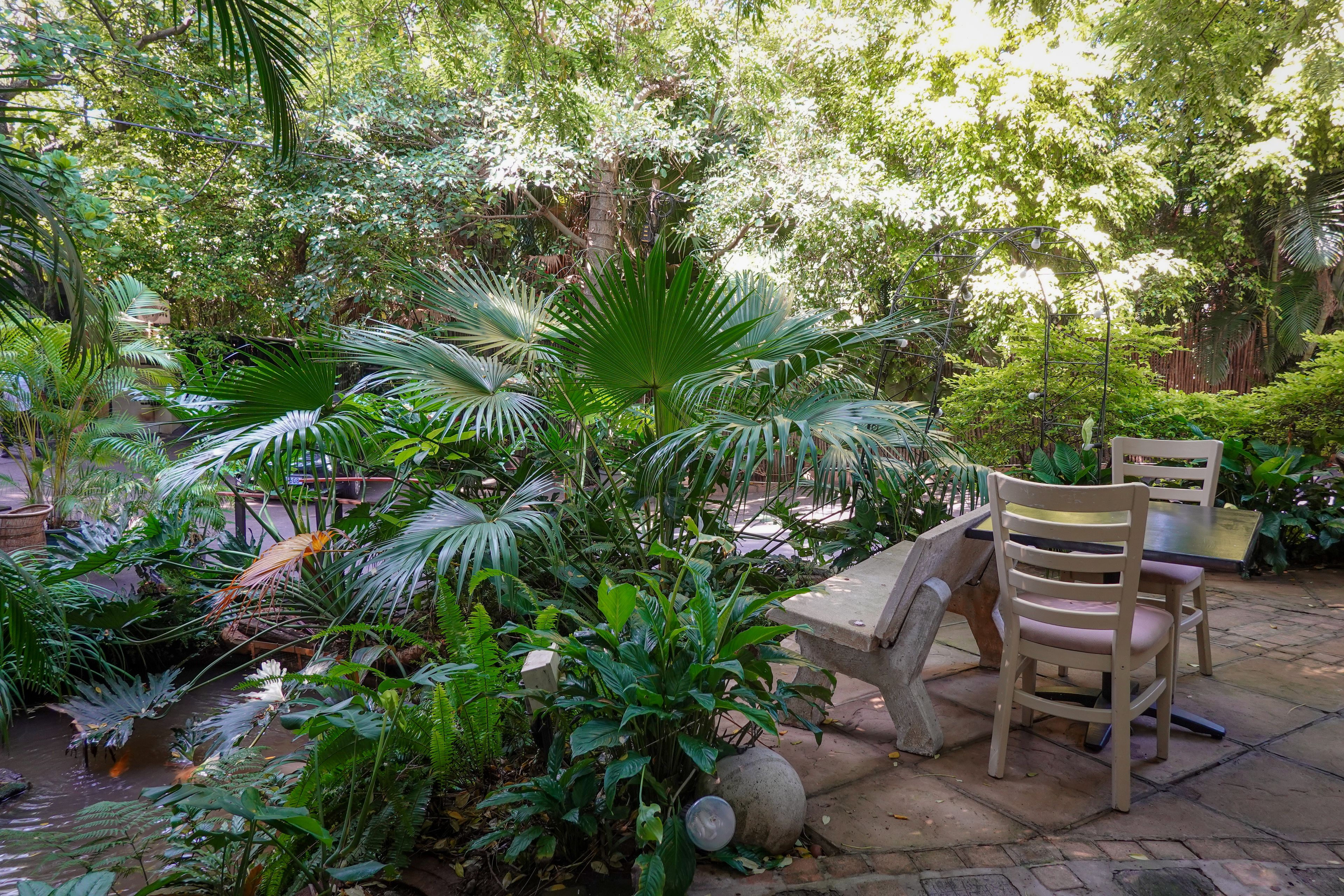
District 3 is regarded as the part of the city with the most old villas left: in the classification reported by Ashui in 2022, nearly 230 stood here. Many keep a yard with large trees, planters, an outbuilding and a garage. Deep shade under the canopy is where adult mosquitoes shelter by day; tree hollows, leaf sheaths, ornamental pots and water features are where water collects for them to lay eggs in. The same trees drop leaves into gutters and onto roof terraces, where blocked water lies unseen from the ground.
Near a canal, mosquitoes also fly in from the surrounding area, and Nhieu Loc ward lies all along one. A single spraying there gives a result for a limited period; the rest depends on clearing standing water regularly inside the property.
Old villas, lane townhouses, canal-side homes: what each survey concentrates on
- Old villas with gardens
- The survey takes in the whole yard, tree bases, planters, outbuilding and garage. Our technicians look under the foliage and at low shrubs and shaded porch corners, where mosquitoes rest by day; your Up specialist empties plant saucers, unused pots and tarpaulins and covers the fish pond.
- Multi-storey townhouses in Ban Co's lanes
- High points come first: roof terrace, balconies, gutters, sheet-metal roofing and window canopies. What can be reached safely is cleared on the spot; a pitched roof or a gutter with no walkway is recorded for a separate survey.
- Houses let by the floor
- With an aircon and a bathroom on every floor, each tenant has drip trays, buckets and vases to check; the Up Report lists the points to watch.
- Homes along the canal
- As mosquitoes may arrive from outside, the survey concentrates on where they rest round the porch and balconies and on the insect screens at doors and windows.
In a multi-storey house: what to check before thinking of spraying
In a house on several floors, mosquitoes may come in through the roof-terrace and balcony doors, or hatch from small pockets of water forgotten in rarely used rooms. Before the survey, look at the insect screens, the vase in the altar room, a bucket in an upstairs bathroom, the tray under the fridge and the aircon drip tray.
- Handling it yourself is reasonable when
- Mosquitoes are only indoors, in one small area, and few larvae show in water containers round the house.
- A survey is worth booking when
- The villa has a large yard with several layers of planting; the house is near the canal; mosquitoes are about all day; or you have just moved back into a house long left empty.
What mosquito control costs in District 3
No standard rate exists: the yard of a villa on Tu Xuong and the roof terrace of a narrow townhouse in a Ban Co lane call for quite different areas and methods. After the free survey you receive one all-inclusive quote: the method, the repeat schedule, the area to be sprayed and the re-entry time, which is how long to stay out of a sprayed area. Once agreed, the price changes only if you approve it in writing. It rests on:
- The size of the yard; the floors, porches, balconies and roof terraces to be treated.
- The density of planting; water features, ornamental ponds and gullies.
- The method chosen and the repeat visits in the rainy season.
- Warranty, if any, for the period and scope the quote sets out.
Narrow lanes, shared walls, older relatives: getting ready for spraying day
A District 3 home is usually a private house with no management office, so the way in and the neighbours through the wall need arranging first.
- Tell us whether a motorbike with equipment fits down the lane, and where the nearest parking is.
- Warn next door when a yard or roof terrace on the shared boundary is to be sprayed, so that they can close windows and bring in washing.
- Say at the survey if the household has older people, small children, anyone with a respiratory illness, dogs, cats, pet birds or a fish pond.
- During spraying, keep the doors to the yard shut and put toys and the pets' feeding bowls away; the fish pond, bowls of water plants and the household water tank are covered as instructed.
- Do not pick vegetables or fruit grown in the yard or on the roof terrace during the interval you are given.
- Everyone returns to the yard and roof terrace only once the re-entry time in the plan has run out; your Up specialist tells you and wipes the outdoor furniture first.
Dengue and a weekly routine for the rainy months
The Ministry of Health and the city's Pasteur Institute explain that dengue is transmitted by the striped Aedes mosquito; it lays eggs in fairly clean water held in containers round the house and bites mostly by day, early in the morning and at dusk. The health service puts it this way: no larvae, no dengue. Spraying at home is a supplement, not a stand-in for the health authorities' measures, and a family member with a high fever should go to a medical facility, not be treated at home.
The rainy months in Ho Chi Minh City usually run from around May until November. Our technicians propose the repeat sprayings for those months and we keep the schedule. In between:
- Sweep up leaves and clear the gutters after a downpour and whenever the trees shed.
- Every week, empty plant saucers, tree hollows and unused pots in the yard; turn over buckets on the roof terrace.
- Keep water tanks and storage jars tightly covered; change vase water often.
- Sleep under a net, by day as well, and work with the local authorities when they spray at an outbreak site.
- Guide: mosquitoes at home in Ho Chi Minh City
- What brings numbers down, and when spraying is worth it.
Who sprays, who watches, and how to book
UpClean's technicians choose and apply the product: one with a valid registration number in Vietnam, on the permitted list, used as the label directs.
- Message or call 0968 726 135 (WhatsApp, Zalo): name the hours when mosquitoes are worst and add photos of the yard and roof terrace, with the address as your papers show it.
- After the free survey, the plan (product name, area to be sprayed, re-entry time) and the all-inclusive quote follow in writing; the family can consider them before choosing a date.
- On the day your Up specialist begins by clearing standing water and fitting covers, then stays to watch the agreed area while our technicians spray. The Up Report records the areas treated, the standing water removed and any high points needing a separate survey.
- If your specialist reaches you over 15 minutes later than the time confirmed, 10% comes off the invoice for that visit. Moving or cancelling costs nothing if you tell us 24 hours ahead; later than that, the cancellation fee is 30%.
What does UpClean's mosquito control include?
- Free garden survey: shrubs, shady corners, ponds, drains and gutters
- Standing water cleared where it is safely reachable: plant saucers, unused pots, covers
- Fish ponds, aquariums, outdoor furniture and play areas protected
- Treatment around the home and garden by UpClean's own technicians
- An Up specialist supervising the agreed area and re-entry times
- Outdoor furniture and play areas wiped after the re-entry time
- Up Report listing treated areas and water points to watch
Written by the UpClean technical team, reviewed by Trần Nguyễn Hữu Nhật — Founder of UpClean.
Sources
- Nghị quyết 1685/NQ-UBTVQH15 về sắp xếp đơn vị hành chính cấp xã TP.HCM năm 2025
- Quận 3 có phường Võ Thị Sáu — VnExpress
- Chi tiết sáp nhập phường của TP.HCM áp dụng từ ngày 1/1/2025 — Tuổi Trẻ
- TP.HCM đã phân loại gần 350 biệt thự cũ, tập trung chủ yếu ở quận 3 — Ashui (2022)
- Kênh Nhiêu Lộc – Thị Nghè — Wikipedia tiếng Việt
- Dự án Serenity Sky Villas — Rever
- Khí hậu, thời tiết TP.HCM — Cổng thông tin điện tử TP.HCM
- Quy định nội dung chủ yếu của bản nội quy quản lý, sử dụng nhà chung cư (Thông tư 05/2024/TT-BXD)