
Are house centipedes dangerous?
The small house centipede very rarely bites, and the large garden centipede is the one to be careful of. Every centipede has venom, but how much that matters to a person differs sharply from one kind to another. A third animal, the millipede, is often mistaken for a centipede.
| What you see | What it is and how careful to be |
|---|---|
| Small, yellowish-grey, with many long thin legs, running fast up a wall | House centipede, a few centimetres long. Material from university extension services in the United States records that it rarely bites people, and that a bite usually means mild pain and local swelling, much like a bee sting. |
| Large, flat, red-brown to dark, with short sturdy legs | The large centipede of gardens, brick piles and the foot of trees, far bigger and longer than the house centipede. Its bite can cause intense, sharp pain with redness and swelling. Take care, above all where there are young children. |
| Round-bodied, slow, curls up when touched | A millipede. Each body segment carries two pairs of legs. It does not bite but can release a fluid that irritates the skin, so wear gloves to clear it away. |
Why do centipedes come into the house?
For prey and for moisture. Centipedes hunt at night and eat cockroaches, spiders, crickets, ants and other small insects. They also need damp surroundings to keep from drying out, which is why they turn up in bathrooms, under sinks, at the foot of damp walls, in storerooms, under the stairs and on the ground floor of townhouses and villas with a garden.
They get in under doors, through uncovered floor drains and through gaps round pipes, or are carried in with plant pots and boxes from outside. In Ho Chi Minh City's rainy season, when the ground is flooded, they tend to look for somewhere drier and more of them end up indoors.
What do centipedes tell me about damp and other insects in the home?
Seeing centipedes often is a sign that the house holds plenty of insects for them to eat. Where they are numerous there is usually a source of damp and a source of insects as well, and both can be somewhere a household would not find without a thorough check.
| What draws them | Where to look |
|---|---|
| Moisture | A bathroom floor that stays wet, a dripping tap or trap, damp marks at the foot of a wall or in a ceiling corner, water standing against the outside wall. |
| Prey | Cockroaches, crickets and spiders indoors. The fewer there are, the less reason a centipede has to stay. |
| Shelter | Cardboard boxes, old clothes and piled-up belongings indoors; rotting leaves, straw, bricks and scrap wood stacked against the house. |
| Sources that are hard to find yourself | A cockroach nest inside a service duct, an uncovered drain pit, a void under the floor, a garden that has been damp for a long time. |
How do I make the house too dry for centipedes?
Centipedes are very sensitive to dryness, so a dry, well-aired house is the measure that matters most and lasts longest.
- Run the bathroom extractor fan after a shower, dry the floor, and do not leave a bath mat or wet towel on the floor overnight.
- Repair leaks at taps, traps and the pipes under the sink, and look for damp marks at the foot of walls and in ceiling corners.
- In the rainy season, use a dehumidifier or the aircon's Dry mode in storerooms and ground-floor bedrooms.
- Clear the drainage channels round the house so that no water stands against the foot of the wall.
- Remove rotting leaves, straw, bricks, stones and scrap timber stacked against the house, and keep a dry, open strip of ground round the foundations.
How do I seal the gaps and clear the places centipedes hide?
- Fit a sealing strip under the front door, the door to the yard and the bathroom door. Use floor-drain covers with a mesh, or a stopper while the drain is not in use.
- Fill gaps at the foot of walls, round pipes and at floor-level sockets with silicone sealant or another suitable material.
- Clear cardboard boxes, old clothes and piles of belongings from the storeroom, from under the beds and from under the stairs, and store things in plastic boxes with lids.
- Check plant pots, boxes, firewood and anything from the storeroom or the garden before it comes indoors.
- Bring down the cockroaches, crickets and spiders in the house: with little to hunt, centipedes have little reason to stay.
There is a centipede in the bedroom. How do I remove it safely?
People come first, small children above all. A single centipede can be dealt with mechanically, without any spray.
- Put on shoes and thick gloves. Never pick a centipede up with bare hands, however small it is.
- Turn a box or a glass jar over it, slide a piece of stiff card underneath, close it and carry it well away from the house to release it. Long tongs also work.
- If it has to be killed, use something with a long handle and clear the body away with paper towel and gloves. Do not hit it with your hand or with the sandal you are wearing.
- Shake out the blanket and pillows, and check shoes and any clothes left on the floor before using them. Keep the bed away from the wall and the bedding off the floor.
- Then look for the damp and the gap that let it in: an adjoining bathroom, the foot of the wall, the gap under the door, a socket at floor level.
What should I do about a centipede bite?
According to Poison Control, the national poison control centre of the United States, a centipede bite usually causes a burning pain that spreads along the finger or toe and lasts from a few hours to a few days, with redness, swelling or bruising at the site. Allergic reactions are uncommon but possible. The steps below are first aid only and do not replace the instructions of a health worker.
- Wash the bite with soap and clean water.
- Hold an ice pack wrapped in a cloth against it to ease the pain and swelling. Do not put ice straight onto the skin.
- Do not cut, squeeze or suck the bite, and do not apply leaves or any substance of unknown origin.
- Get medical help at once for signs of allergy such as hives, dizziness, swelling of the lips or throat, or difficulty breathing.
- Go to a medical facility if the person bitten is a young child, an older person or someone with an underlying illness; if the pain is severe or the swelling is spreading; or if, some days later, the bite is hot and red, has pus or comes with a fever.
- Ask a health worker about pain relief and about tetanus vaccination status.
Should I use insect spray against centipedes?
A spray kills only the centipedes it hits and does nothing about damp or gaps, so it is a supplement at most. If you use one:
- Choose only a product with a registration number from Vietnam's Ministry of Health, and read the label before use.
- Do not spray bedding, pillows, mattresses, toys, food or people, and take young children and pets out of the room.
- Never mix products or pour one into a drinks bottle, and store it where children cannot reach.
- Ventilate with the door or window open for the time stated on the label before anyone goes back into the room.
When should I call pest control about centipedes, and what does UpClean do?
Arrange a full survey when centipedes appear regularly, when a large centipede has been found inside the house, or when there are young children or older people at home. UpClean's survey is free, and a written plan with an all-inclusive quote follows it.
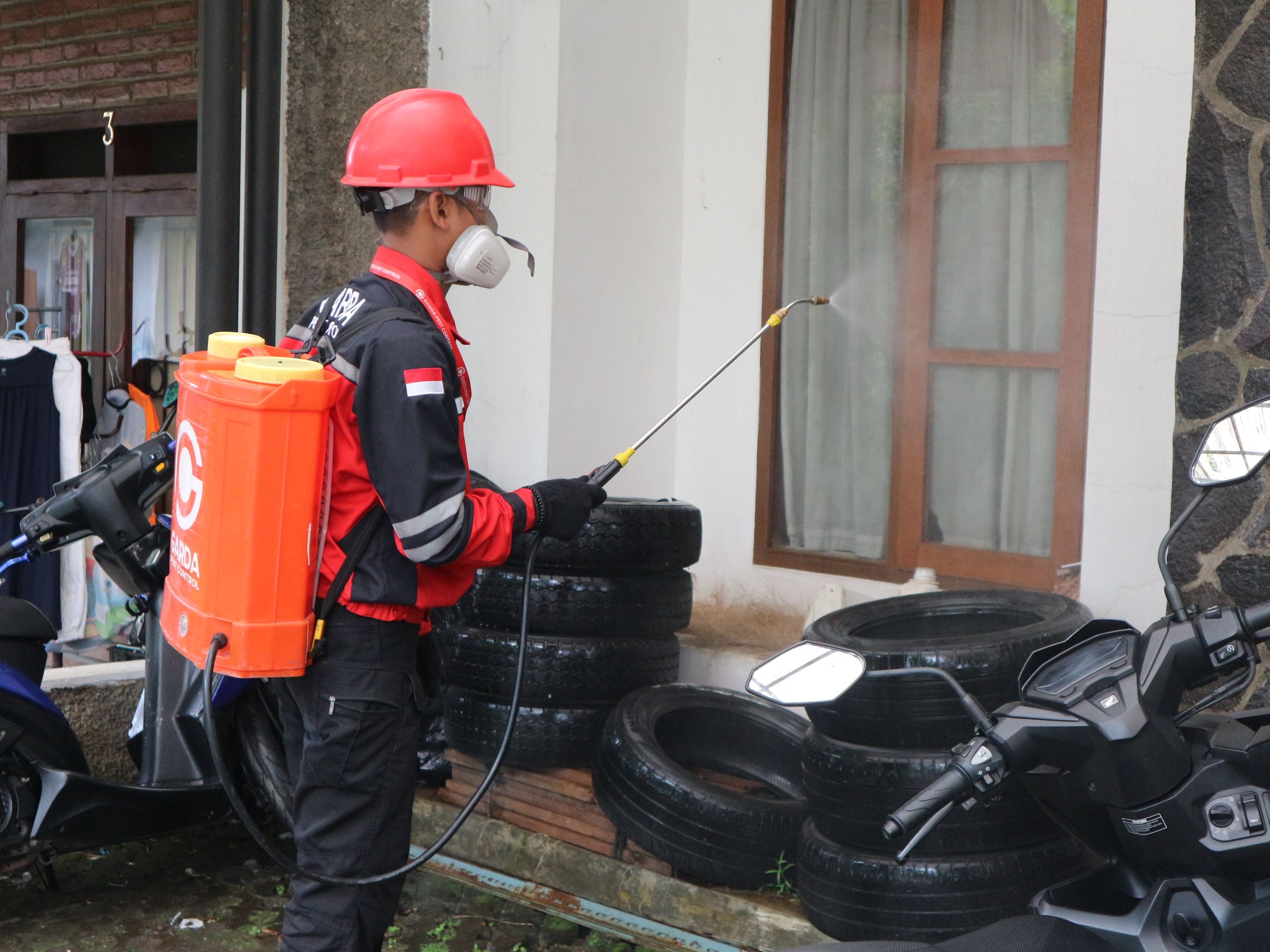
The treatment itself is done by UpClean's own pest-control technicians, with products registered with Vietnam's Ministry of Health. Up specialists, UpClean's identity-verified and trained staff, cover bedding and belongings, keep watch at each working point and clean when the treatment is finished. The Up Report, the photo-and-notes record that arrives by WhatsApp or Zalo after the visit, lists the damp spots, gaps and hiding places that still need putting right. UpClean has declared its eligibility to provide pest-control services as required by regulation; the declaration and product information are available on request.
To book, phone or message 0968 726 135 (WhatsApp and Zalo on the same number) between 7:00 AM and 8:00 PM, every day, and send a photo of the centipede if you have one. You can write in English and receive the quote and the Up Report in English. Ahead of the visit UpClean sends the specialist's name and photo, which you can pass to building management where outside staff have to be registered.
- Pest control
- The service page: survey, methods and how to prepare.
- Cockroach control
- For cockroaches, one of the insects centipedes hunt.
- Cockroaches, ants and geckos in Saigon apartments
- Reducing the prey that keeps centipedes in a home.
- Mould and humidity in Saigon apartments
- More on damp and humidity indoors.
- Book a survey
- Send the request online.
Frequently asked questions
Are small centipedes in the house poisonous?+
The small long-legged house centipede has venom but very rarely bites people; a bite usually brings mild pain and swelling, like a bee sting. Anyone prone to allergy should still watch for unusual symptoms and see a doctor if they appear.
Is a centipede bite dangerous?+
In most cases it causes pain, redness and swelling at the site that ease over a few hours to a few days. Go to a medical facility for signs of allergy, severe pain, spreading swelling or infection, or if the person bitten is a young child or an older person.
Why do I keep finding centipedes in my bedroom?+
A bedroom with an adjoining bathroom, a gap under the door, damp under the bed or a lot of stored clutter gives them insects to hunt and somewhere to hide. Less damp, sealed gaps and a clear floor under the bed reduce them considerably.
Does one centipede mean there is a nest in the house?+
Not necessarily; it may be a single stray. Frequent sightings, particularly of young centipedes, suggest a damp place with plenty of insects that suits them, and the house deserves a careful check.
Do lime, salt or essential oils keep centipedes away?+
There is no reliable evidence that they reduce centipedes in the long run. Lime powder can irritate the skin, eyes and airways, and concentrated essential oils are unsuitable in a home with young children or pets. Reducing damp and sealing gaps remain the main measures.
Do more centipedes come indoors in the rainy season?+
Usually, yes. When the soil is waterlogged they look for dry ground and slip in under doors and through floor drains, mostly on the ground floor of townhouses and villas with gardens.
Do I need the whole house sprayed for centipedes?+
Not always. If centipedes are still numerous after you have reduced damp and sealed gaps, have the source identified by a survey first, and only then decide with an eligible provider whether a chemical treatment is needed.
Related guides
- Termite treatment cost: what decides it, how to read a quote, and why a price by phone is unreliable
- Termite inspection and treatment step by step: what happens, how long it takes and what to prepare
- Termite bait stations: how they work, where they go and how long the colony takes to stop
- Flying termites in the house: what a swarm means, what to do tonight and when to call for a survey
- Wasp or bee nest near the house: how to tell which it is, what to do, and when to call for removal
- German cockroaches: how to identify them, why sprays fail, and how to get rid of them
- Woodworm in furniture: the signs, how to tell it from termites, and how to treat it
- Geckos in the house: are they harmful, why they come in, and how to keep them out
