
Why do apartments in Ho Chi Minh City get damp and mouldy?
The rainy season in Ho Chi Minh City lasts for many months, and through it the outside air is humid most of the time. Rooms that stay shut get little ventilation: a guest bedroom, a storeroom, or the whole apartment while you are away. Moisture still gets in through gaps around doors, a wall that seeps, the bathroom next door or laundry dried indoors.
When humidity stays high, mould grows on walls, ceilings, wood, leather and fabric and inside wardrobes, and a musty smell comes with it. The EPA's mould guidance says the key to controlling mould is controlling moisture. The World Health Organization's guidelines on indoor dampness and mould also treat persistent damp as a factor in respiratory health, particularly for people with asthma or allergies.
What humidity level should you aim for indoors?
The EPA's figure is below 60% relative humidity, ideally 30–50%. In a tropical climate, around 50–60% already carries a much lower risk of mould; going far below that costs electricity and can dry skin and throat.
A small digital hygrometer, sold in electronics and homeware shops, is more reliable than how the air feels. Read it at several times of day, especially early in the morning and after rain. The room gives signs too:
- Condensation on windows and mirrors.
- Black spots on walls, or paint that blisters.
- White mould on leather goods.
- Clothes that smell damp when they come out of the wardrobe.
Where is the musty smell coming from?
Find the source before buying anything scented. Close each room for a few minutes and then open the door: the smell is strongest where it starts.
| What you notice | Likely source and first step |
|---|---|
| A damp, musty smell in one room | High humidity, a wardrobe kept shut, or a water stain in a corner of the wall or ceiling. Measure the humidity and look for the stain. |
| Musty air for the first minutes after the aircon starts | A dirty indoor coil, blower wheel or drip tray. Washing the filter helps a little; the smell usually goes only after a deep clean of the unit. |
| A wardrobe or shoe cabinet that smells damp | Clothes put away before they were fully dry, or a cabinet against a damp wall. Store only dry items, add an absorber tub, and open the doors on dry days. |
| A sofa, mattress, rug or curtains that smell worse in wet weather | Fibres absorb sweat, cooking smells and moisture, then release them when the air turns damp. Once the smell is in the cushion core or the rug backing, the item needs a deep clean. |
| A sewer or rotten-egg smell in a bathroom | Not damp: the water seal in a floor-drain trap has usually dried out. Pour a jug of water into rarely used drains once a week and scrub the drain cover. |
How do you stop damp at the source?
Drying a room that keeps taking in moisture achieves little, so deal with the sources before spending on equipment.
- Stains or yellow marks on a wall or ceiling: have the roof, the pipes and the bathroom above checked, and get the leak repaired first.
- Run the extractor fan while you shower and for a while afterwards, and keep the bathroom door closed.
- Avoid drying laundry in a closed room; use a balcony with a breeze, a room with an extractor fan, or a vented dryer.
- Switch on the cooker hood when you cook, and keep lids on simmering pots.
- Open the windows at the dry times of day and close them when it rains. Air that is more humid than the room only makes the room damper.
- Stand wardrobes a few centimetres off the wall, so air can move behind them.
Aircon Dry mode, a dehumidifier or silica gel: what can each one do?
The tools differ mainly in how much air they can handle. Match the tool to the size of the space.
| Method | Where it works and what to expect |
|---|---|
| Aircon, in Cool or Dry mode | Cooling condenses moisture on the indoor coil and drains it outside, so the room is usually drier while the unit runs. Many units also have a Dry mode, marked DRY or with a water-drop symbol, which runs the fan slowly to favour moisture removal over cooling and suits cool rainy days; behaviour varies by model. A dusty coil or blocked drip tray can make the unit drip, smell and harbour mould itself. |
| Dehumidifier | The economical choice for a room that stays closed and unused for long periods. Running an aircon there only to dry the air usually costs more. |
| Silica gel sachets | For small sealed spaces: a camera box, shoe cabinet, drawer or suitcase. In the middle of a room they change almost nothing. |
| Absorber tubs with salt granules | They collect moisture as liquid and suit wardrobes and shoe cabinets. Replace them when full, and keep them away from children and pets. |
| Activated charcoal | It mainly adsorbs odours; its effect on the humidity of a room is negligible. |
How to choose and run a dehumidifier in Vietnam
Household dehumidifiers are rated in litres of water removed per day, at a test temperature and humidity stated by the manufacturer. Start from that rating and the recommended room size.
- Capacity: for a very damp room, a ground-floor room or a storeroom, choose a model above the minimum for the floor area.
- Humidistat: pick a model that stops when it reaches the humidity you set.
- Drainage: a continuous drain hose suits storerooms and rooms nobody enters; a tank-only model has to be emptied often.
- Placement: close the windows and the door while it runs, keep the clearance the manufacturer specifies, and put it near the main damp spot, such as the wall shared with a bathroom.
- Cleaning: wash the tank and wash or replace the filter regularly. Water left standing turns slimy and starts to smell.
How do you clean mould safely?
On hard surfaces such as ceramic tile, glass and plastic, the EPA's guidance is to scrub the mould off with detergent and water and then dry the surface completely. Plasterboard, ceiling tiles, carpet and mattresses with widespread mould are hard to clean fully and may have to be replaced. The EPA also advises finding experienced help when the mouldy area is large, roughly more than a square metre, or when the mould follows a leak of dirty water.
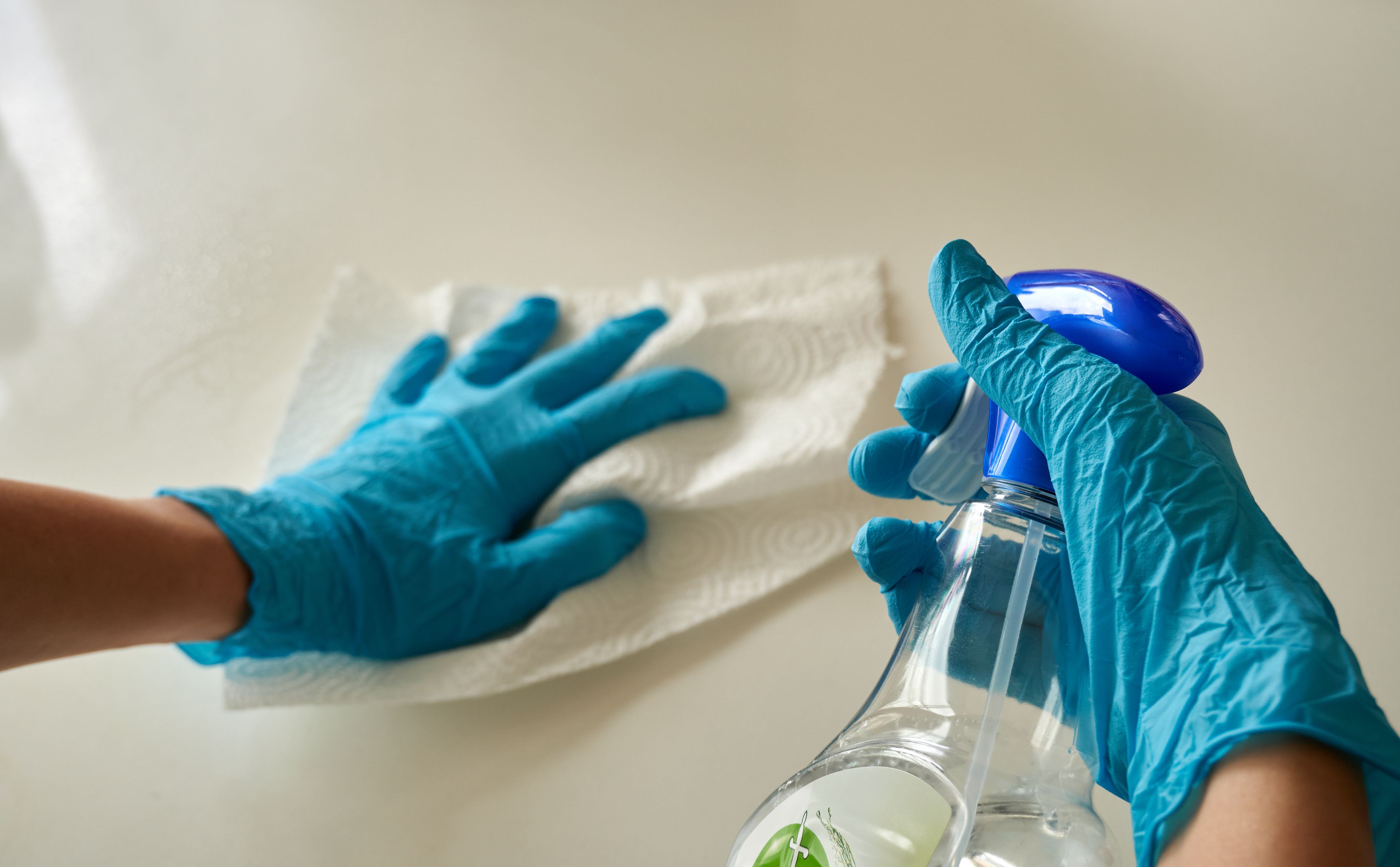
- Wear gloves, a fine-particle mask and eye protection, and open the windows.
- Do not scrape or dry-brush a large patch, because that spreads spores. Dampen the surface lightly before you wipe.
- Never mix chlorine bleach with ammonia, vinegar or acidic cleaners; the mixture can release toxic gas.
- Repainting a mouldy wall before the damp is fixed rarely lasts: the mould returns and the paint peels.
- People with asthma or allergies, pregnant women and small children should keep away from the area while it is being treated.
What does it cost to have damp smells treated?
These are UpClean's listed prices, all-inclusive and confirmed in writing before the visit. The minimum for an odour visit is 800,000 VND.
| Problem | Service and listed price |
|---|---|
| Musty wardrobe or shoe cabinet | Wardrobe odour treatment, 350,000 VND per wardrobe: contents taken out as agreed, shelves vacuumed, wiped and deodorised, left to dry, and everything put back. |
| Sofa with a damp smell | Sofa odour treatment, 80,000 VND per seat (minimum 300,000 VND), done in place. If the smell has soaked deep, the specialist recommends a full sofa clean. |
| Mattress with a damp smell | Handled as mattress cleaning: vacuuming, washing and moisture extraction at home, from 350,000 VND. |
| Aircon that smells musty or drips in Dry mode | Aircon cleaning of the coil, drip tray and drain line, from 250,000 VND per wall-mounted unit. |
| Curtains that hold the smell | Curtain cleaning, 40,000 VND per m² (minimum 400,000 VND). |
| An apartment shut up for a long time | A deep clean covers the kitchen, bathrooms, floor drains, cupboards and hidden corners in one visit: 15,000 VND per m² (minimum 900,000 VND). |
What UpClean does about damp and musty smells, and how to book
For a damp-related smell, an Up specialist (one of UpClean's identity-verified, trained cleaners) finds where the smell starts, cleans that source, then deodorises with permitted products chosen for the material. Afterwards you receive an Up Report by WhatsApp or Zalo: before-and-after photos and notes on any spot that shows seepage or mould.
We do not repair leaks, waterproof walls or fix plumbing. When the cause is a damp wall or a pipe, we record it and tell you which trade to call. Our disinfection is surface disinfection: we do not sterilise, we quote no kill rates and we make no medical claims.
To book, call or message 0968 726 135 (phone, WhatsApp or Zalo) between 7:00 AM and 8:00 PM, any day of the week. Quotes, confirmations and reports can all be in English. Photos of the wardrobe, wall or sofa help us quote, and the price is agreed before anyone comes.
- Get a quote
- Price your visit online before you decide.
- Book a visit
- Choose a day and time. We confirm in writing and send a reminder the day before.
- The Up Report
- If something is not right, reply to the report: items within the agreed scope are redone free of charge within the period in our Warranty Policy.
Frequently asked questions
Does aircon Dry mode use less electricity than Cool mode?+
It depends on the model, the room temperature and the humidity. Dry mode usually cools more gently, so it suits cool rainy days.
Can I clean mould off a wall with bleach?+
For hard surfaces the EPA's guidance is detergent and water, then drying the surface fully. If you use bleach, never mix it with ammonia or anything acidic, wear gloves and a mask, and open the windows. Plasterboard or paint with mould deep in it usually needs the leak fixed and the wall repainted.
My apartment was closed for weeks and smells musty. What should I do first?+
Open every door and window, pour water into the floor drains and sinks, and check the fridge and the bin. Wash the aircon filters before switching on; if the air still smells musty with the aircon running, the units need a deep clean.
Should I use an ozone generator to remove the smell?+
Not while people or pets are in the home, because ozone can irritate the airways. Ventilating and cleaning the source of the smell is the safer choice.
Why does a wardrobe smell musty again after it has been cleaned?+
The usual reason is the wall behind it. If the wardrobe stands against a wall that takes in damp, the waterproofing has to be dealt with separately or the smell returns.
Does UpClean remove mould or sterilise a home?+
We clean surfaces, treat musty odours at their source and note seepage or mould spots in the Up Report. Disinfection means cleaning first, then permitted products left for the correct contact time. We do not sterilise and we quote no kill rates.
