
Why do ants keep coming back after I clean them up?
The ants on the worktop, in the sugar jar or round the pet's bowl are workers sent out to look for food. Behind them is a nest holding the queen, the eggs and the larvae, tucked out of sight in a crack in a wall, under a floor tile that has come loose, behind the kitchen units, inside a socket or in a plant pot. A worker that finds food lays a scent trail on its way back, and the rest of the colony follows it.
Wiping up or spraying the ants in view therefore solves the problem for a few hours to a few days. To end it, something has to reach the nest: either you get to the nest itself, or the workers take bait home and feed it to the colony.
Which ant is it? Tiny pale ants, small black ants and fire ants
Tell these apart first, because the treatment follows from the kind of ant. The last row is an insect that is called an ant in Vietnamese and is not one.
| Ant | How to recognise it and where it nests |
|---|---|
| Tiny pale ants on sweet or greasy food | Very small, yellow-brown to light brown and quick. They crowd onto sugary food and anything oily. Many of the species in this group keep several queens in one colony, and the nest sits somewhere warm and damp: a joint in the kitchen units, a service duct, the back of an electrical appliance. |
| Small black ants in a long line | They usually march in from outside along the foot of a wall or over a door sill. The nest tends to be under paving in the yard, in a crack in the floor or in a planter. Expect more of them during heavy rain or a spell of fierce sun. |
| Fire ants (red ants with a painful sting) | Reddish-brown ants that raise mounds of soil in gardens and on lawns. The sting burns and comes up as a pustule. In someone prone to allergy it can set off a reaction through the whole body, so deal with a mound cautiously. |
| “Kiến ba khoang” | Not an ant, whatever the name suggests, but a small beetle. It is kept out of a home in a completely different way from anything described here. |
How do I find the ant nest?
Follow the workers home. The aim is the point where the line disappears.
- Look in the early evening, when ants are most active. With a torch, trace the line backwards to the place where it vanishes.
- Check the usual exits: joints between wall tiles, the top edge of the skirting, the hole where pipes pass under the sink, sockets and door frames.
- Set a drop of honey and a crumb of something rich in protein, such as meat, a few centimetres apart. The one the ants choose shows whether the colony currently wants sugar or protein, and that tells you which type of bait to buy.
- Water the house plants and watch. Loose soil with ants running out of it means the nest is in the pot.
- Note each spot and photograph it. Do not chisel into the gap or pour water in: the colony will move the nest somewhere else.
How does ant bait work, and how do I use it properly?
Bait is slow on purpose. It is designed to act late enough for a worker to carry it home before dying, so that the colony is reached through its own foraging. Work through six steps in this order:
| Step | What to do |
|---|---|
| 1. Cut off the food | Shut food away, clear crumbs and wash up straight after meals. The section on the kitchen below gives the detail. |
| 2. Remove the scent trail | UC IPM states that vacuuming the trail or wiping it with soapy water can do as much as an aerosol to clear foraging ants for the time being, because soapy water takes the scent away. Be most thorough at the point where the ants come into the house. |
| 3. Put the bait down | Choose an enclosed bait station that carries a registration number from Vietnam's Ministry of Health. Set it right beside the trail and the entrance to the nest, somewhere small children and pets cannot reach, such as the gap behind a cabinet or under the kitchen units, and read the label. |
| 4. Leave it alone | No wiping and no spraying anywhere near the bait. A crowd of ants round the station during the first few days is the normal course: they are feeding and carrying it back, and numbers then fall gradually. |
| 5. Close the way in | Once the ants have clearly dropped off, fill cracks, the edges of pipes and the gap along the skirting with a suitable sealant. |
| 6. Keep watching | Replace a station when it is empty. Check again after a few weeks, and after every spell of heavy rain. |
Why does spraying the ant trail fail?
A spray kills the workers it lands on and leaves the nest as it was. UC IPM's guidance is that spraying ants inside the house does not keep more from coming in, works only for a short time and may not be safe in rooms people live in.
With the tiny pale ants it can backfire. UC IPM's material on the Pharaoh ant, a very small species that commonly nests inside buildings, describes a colony breaking up into several new nests when it is disturbed. Many households notice more of these ants after spraying for that reason: the colony has not gone, it has spread into the cabinet joints, the electrical boxes and the room next door. Slow-acting bait suits this group better.
If a survey is planned, do not spray beforehand: scattered ants make the source harder to find. Photograph what you see and leave it as it is.
How should I keep the kitchen and store food while the bait is working?
The aim is that the ants find no food except the bait.
- Keep food, sweet things above all, in clean containers with tight lids. UC IPM specifically advises against plastic bags and packaging that has already been opened.
- Wipe up crumbs and wash the dishes as soon as the meal is over.
- Cover pet food, and do not leave the bowl out overnight.
- Keep the bin covered and dry the sink before bed.
Do soapy water, vinegar, essential oils and boiling water work on ants?
| Remedy | What it does and where it stops |
|---|---|
| Soapy water | Useful, according to UC IPM, for clearing a trail and the scent that marks it. It does not kill the nest; it prepares the ground for bait. |
| Vinegar, lemon juice, cinnamon powder, chalk | They can break a trail for a while, and then the ants go round. Vinegar and lemon are acidic and may take the shine off natural stone such as marble. |
| Peppermint, lemongrass or orange oil | UC IPM records that plant oils kill ants well on contact but have little lasting effect. They deal with the moment, not with the colony. |
| Home-made bait of sugar and a chemical | Not advised. It has no safe container, a child or a pet can eat it by mistake and its strength is hard to control. An enclosed, registered bait station is far safer. |
| Boiling water on the nest | Worth considering only for a mound out in the yard, well away from plants. Indoors it can scald you, damage tile grout, soak into the wall and make the ants move their nest. |
What do I do about a nest in a plant pot, or fire ants in the garden?
For a pot with a nest in it, UC IPM's instructions are to carry the pot out of the house and stand it for 20 minutes or longer in a solution of insecticidal soap and water. Let it drain, then check the drainage holes and the saucer before it comes back indoors.
Fire ants are a separate matter because they sting. If you are stung, move away from the mound, brush the ants off your skin, wash with soap and water, hold something cool on the spot and do not scratch. Call the emergency number 115 or go to a medical facility at once if there is difficulty breathing, swelling of the lips or face, hives over the whole body or dizziness: these can be signs of anaphylactic shock.
When should I call someone about ants?
Call a pest-control provider in any of these cases:
- Ants turn up in several rooms or on several floors.
- Bait has been set out correctly for a few weeks and the numbers have not fallen.
- The nest is in a service duct, a socket or an electrical appliance.
- There is a large fire ant mound in a garden where young children play.
- The property is a rental apartment or a restaurant, where the work has to be done neatly.
What UpClean does about ants, and how to book a survey
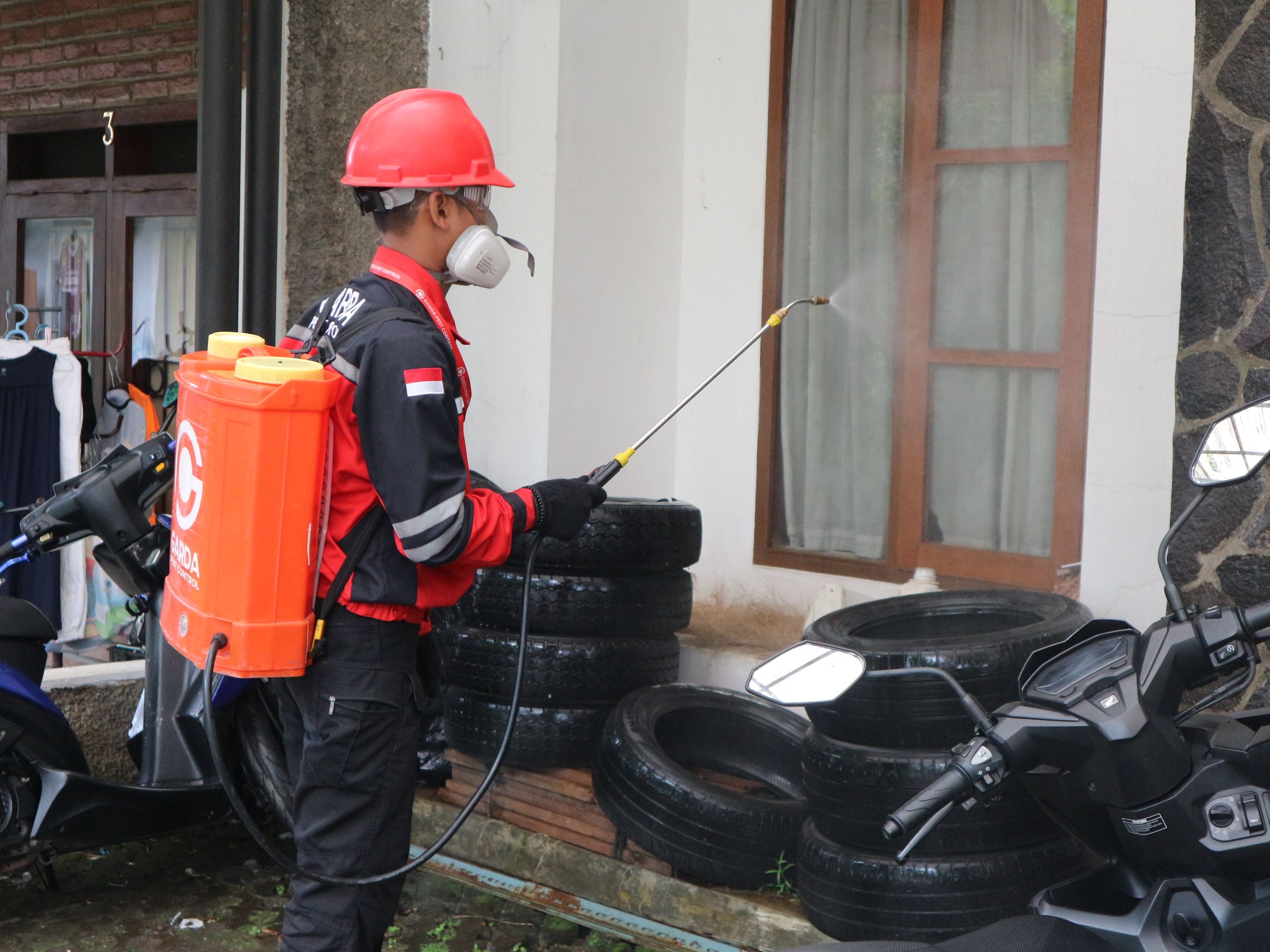
The survey is free. UpClean's own pest-control technicians carry it out together with an Up specialist, a member of UpClean's identity-verified and trained staff, and they follow the trails back to where the ants shelter. They favour bait placed at points along the route, treat a gap or a door threshold locally only where that is needed, and keep spraying in living areas to a minimum. The technicians choose the product from those permitted in Vietnam and name it in the plan you receive beforehand; if you want as little spraying as possible, say so at the survey.
A written plan and an all-inclusive quote follow the survey. During the treatment the Up specialist watches each working point and cleans up afterwards. The Up Report, the record UpClean sends by WhatsApp or Zalo once the job is done, lists the gaps that still need sealing so that the household can prevent a return. UpClean has declared its eligibility to provide pest-control services as required by regulation; the declaration and product information are available on request.
To start, send photos or a short video of the ants and the places you found them to 0968 726 135 on WhatsApp or Zalo, or phone between 7:00 AM and 8:00 PM, any day of the week. Messages, the quote, the booking confirmation and the Up Report can all be in English. Before the visit you are sent the specialist's name and photo, which is also what building management wants where residents have to register outside staff.
- Pest control
- The service page: methods, preparation and the areas covered.
- Cockroaches, ants and geckos in Saigon apartments
- The shorter overview, for a kitchen that has cockroaches as well.
- Book a survey
- Send the request online.
- Contact UpClean
- Phone, WhatsApp, Zalo and the office address.
Frequently asked questions
What is the fastest way to get rid of ants in the house?+
For an immediate effect, wipe the trail with soapy water and shut all food away. To finish the colony, set bait for the workers to take home; UC IPM's figure is 5 to 10 days before you see fewer ants.
Why are tiny ants so hard to get rid of?+
Many of these very small, fast species keep several queens and nest in closed gaps. Spraying tends to scatter the colony instead of destroying it, which is why bait is the usual choice.
Do ants come indoors more when it rains?+
The small black ants that nest outdoors are seen in the house more often during heavy rain, and also in very hot, sunny weather. Look at the bait and the entry points again after each heavy downpour.
Ants are coming out of a power socket. What should I do?+
Do not break the fitting open or pour water into the gap, because the colony will move elsewhere. A nest in a socket, a service duct or an electrical appliance is a case for a professional; note the spot and photograph it.
When should I see a doctor about a fire ant sting?+
Call 115 or go to a medical facility at once for difficulty breathing, swelling of the lips or face, hives over the whole body or dizziness. A sting that turns red and swollen over a widening area, fills with pus or comes with a fever should also be examined.
How much does ant control cost in Ho Chi Minh City?+
There is no listed price. The cost follows from the survey: which ant it is and how widely it has spread, the type and size of the property, and whether the work is a single treatment or a scheduled programme. The survey is free; the quote is written and all-inclusive.
Related guides
- Rove beetles in Vietnam (“kiến ba khoang”): what they look like, what to do if one lands on you and how to keep them out
- Flies in the house: where house flies and drain flies breed, and how to get rid of them
- Centipedes in the house: are they dangerous, why they come in and how to keep them out
- Termite treatment cost: what decides it, how to read a quote, and why a price by phone is unreliable
- Termite inspection and treatment step by step: what happens, how long it takes and what to prepare
- Termite bait stations: how they work, where they go and how long the colony takes to stop
- Flying termites in the house: what a swarm means, what to do tonight and when to call for a survey
- Wasp or bee nest near the house: how to tell which it is, what to do, and when to call for removal
