
Which kind of leather is my sofa?
The supplier's paperwork is the surest answer. Without it, put a single drop of water on the back of the sofa or another place that does not show. A drop that sits on the surface usually means pigmented leather. A drop that sinks in quickly and leaves a darker mark usually means aniline or semi-aniline. Every later decision depends on this.
| Leather | How to recognise it, and what it tolerates |
|---|---|
| Pigmented leather | The usual covering of family sofas. The colour is even and a protective coating lies on top, so it takes light wiping with a damp cloth and is the easiest to care for. |
| Aniline and semi-aniline | Soft, with the natural grain clearly visible. It takes up water and oil very readily: use the least possible cleaner and leave stains to a specialist. |
| Suede and nubuck | A surface as fine as velvet. It tolerates neither water nor liquid cleaners and is cleaned with a brush and tools made for suede. |
| Faux leather (PU, leatherette) | A uniform surface that does not absorb water. Wipe it with a damp cloth and a neutral cleaner, and keep solvents away from it, because they make the coating peel. |
Which leather couch cleaner should I use, and what should never touch leather?
Choose something mild and use no more than you need. One wrong product can leave a tide mark, a stiff patch or faded colour that is hard to put right.
| Product or tool | Verdict |
|---|---|
| A pH-neutral cleaner made for leather | Use it. This is the standard choice. |
| Clean water with a few drops of mild soap | Only on pigmented and faux leather. |
| Conditioning cream or lotion for furniture leather | Use it after cleaning, on a surface that is fully dry. |
| Alcohol, glass cleaner, multipurpose spray, chlorine bleach, ammonia, petrol and other solvents | Never. |
| Strong vinegar, toothpaste, cooking oil, olive oil | Avoid these home remedies. Cooking oil can leave streaks, hold dust and start to smell with time. |
| Baking soda | Avoid it. The powder is mildly alkaline and gritty; rubbed into leather it can dry it out and wear down the coating. |
| Melamine “magic” sponges, the rough side of a scourer, stiff brushes, wipes containing alcohol | Avoid them. They are rough on the surface. |
How do I clean a leather sofa step by step?
These steps are for pigmented and faux leather with ordinary soiling or a fresh, small mark. Before you start, check four things. You know the leather type. The mark has not already been treated with another chemical. You have a leather cleaner and have tested it out of sight. The surface is not cracked, peeling or widely mouldy. For aniline, suede or a valuable piece, or if any of the four is in doubt, ask a specialist first.
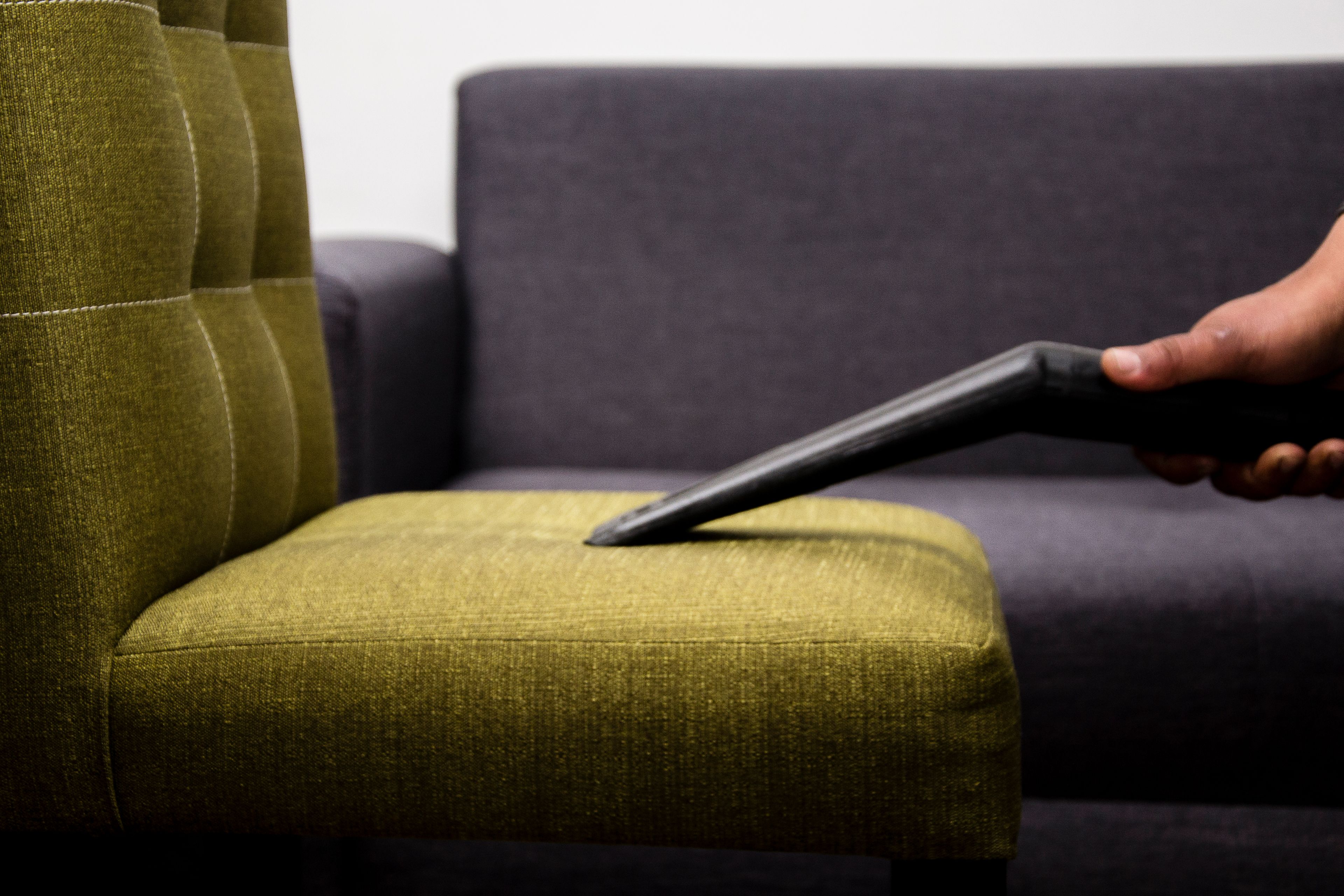
- Vacuum with a soft-bristle head, above all the gap between seat and back, where crumbs and grit collect and scratch the leather.
- Test the cleaner on the back or under a cushion, wait for it to dry and look at the colour.
- Spray the cleaner onto a microfibre cloth, never straight onto the leather, and wipe gently in circles. Work in small sections so that the liquid does not stand on the surface.
- On headrests and arms, where skin oil and sweat build up, make several light passes in place of one hard one.
- Wipe once more with a cloth dampened in clean water and dry immediately with a dry cloth.
- Let the sofa finish drying in the air. Use no hairdryer and do not move it into the sun.
- When the surface is completely dry, apply a thin coat of leather conditioner, give it the time its instructions state and buff evenly with a clean cloth.
How often should I condition leather, and how do I protect it in Saigon's climate?
Conditioning keeps the surface supple and limits cracking. For a sofa in daily use, every 6–12 months is a reasonable guide, or whatever the manufacturer recommends, and sooner for a sofa that stands near a sunny window. Apply it thinly: surplus conditioner holds dust and leaves the surface greasy.
- Keep the sofa out of direct sun through window glass. Prolonged sun fades leather and dries it out.
- Do not let the aircon blow straight onto it for long periods.
- In the rainy season, keep the room ventilated; a dehumidifier helps to limit mould.
- Dust it every week with a soft dry cloth, and keep sharp objects and pets' claws away from it.
How do I treat spills, ink and mould spots on leather?
| Problem | What to do |
|---|---|
| A spilt drink | Blot straight away with a dry cloth, without smearing it across the surface, then clean in the usual way. |
| Grease and finger marks | Blot up what you can, then use the leather cleaner. On aniline, oil that has sunk in is very hard to deal with at home. |
| Ballpoint or felt-tip ink | Do not try alcohol or bleach on it: the ink tends to spread further. Contact a specialist early. |
| Sweat marks on headrests and arms | Clean them regularly with leather cleaner. Marks that are years old may already have changed the colour of the coating. |
| Mould spots in the rainy season | Wipe with a barely damp cloth and leather cleaner, dry thoroughly and give the room more ventilation. Mould that is widespread or keeps coming back needs professional treatment. |
Can cleaning fix cracks, peeling or colour that has changed?
No. Cleaning and conditioning slow the spread of cracks, but they cannot repair a crack or a coating that has peeled away. That work is leather restoration and lies outside the scope of a cleaning visit. On faux leather whose surface has cracked or come off in patches, cleaning leaves the sofa tidier and cannot join the coating again; send a photo for advice before you book.
Colour is a similar case. Prolonged sun fades leather, a single wrong chemical can leave a pale or stiff patch that is hard to put right, and an old sweat mark may have altered the coating itself. With ink and long-set marks the result depends on the leather, so the specialist tells you beforehand how far a mark can be recovered.
What does a professional leather clean cover, and how is each leather handled?
Leather is not washed with water and not spray-extracted the way fabric is. It is cleaned with a leather cleaner, a soft-bristle brush and fine microfibre cloths, using as little moisture as possible, and then conditioned so that it stays supple and keeps its natural sheen.
| Leather | How UpClean handles it |
|---|---|
| Pigmented | Cleaned section by section with minimal moisture, then conditioned. |
| Aniline, semi-aniline | The smallest possible amount of solution. Oil that has gone deep is hard to treat. |
| Faux leather | With the coating intact, it is treated like genuine leather. If it is cracked or peeling, it is assessed from photos first. |
| Suede, nubuck | These take up water very fast, mark easily and can stiffen. They are always assessed first, from photos or on site, and a method is proposed only when it is safe for the material. |
| Leather and fabric on one sofa | Each part follows the procedure for its own material, and the price is agreed from photos before booking. |
| Outside the service | Washing with water, spray extraction, and the repair of cracks or peeled coating. |
What does leather sofa cleaning cost?
UpClean's listed price for leather is 160,000 VND per seat, conditioning included, plus 50,000 VND for each ottoman or loose cushion. The minimum per visit is 390,000 VND, reached at 3 leather seats. Leather costs 30,000 VND more per seat than fabric because of the conditioning step. A three-seater takes about 60–90 minutes and can be used again roughly 30 minutes afterwards, once the conditioner has been absorbed.
| Sofa | Price |
|---|---|
| Leather armchair, 1 seat | 390,000 VND, the visit minimum (160,000 VND by the seat). |
| Two-seater | 390,000 VND, the visit minimum (320,000 VND by the seat). |
| Three-seater | 480,000 VND. |
| L-shaped sofa, 5 seats, with 1 ottoman | 850,000 VND. |
| Suede, nubuck, or leather combined with fabric | Confirmed from photos before booking. |
What UpClean does on the visit, and how to book
The work is done in your home. The Up specialist, an identity-verified cleaner trained to the Up Standard, checks the leather type, the stitching and the state of the surface, covers the floor, the skirting and the furniture nearby, and tests the cleaner where it will not show. The frame, crevices, arms and underside are vacuumed, the leather is cleaned one section at a time, drink, sweat and skin-oil marks get spot treatment, and the conditioner goes on last. Cracks and peeling are pointed out before work starts.
You inspect the result together in a walk-through and pay afterwards by bank transfer or cash; the price is the fixed figure agreed in advance. The Up Report follows by WhatsApp or Zalo with before-and-after photos, the checklist completed and the start and finish times. Anything within the agreed scope that is not right is redone free of charge within the period in the Warranty Policy, 48 hours by default.
Bookings are taken on 0968 726 135 by phone, WhatsApp or Zalo, 7:00 AM to 8:00 PM, seven days a week. Give the number of seats and the leather type, and send photos of suede, nubuck, cracked or peeling leather and mixed-material sofas. Enquiries, quotes and the Up Report can be in English; if you would like a specialist who speaks English in your home, say so when you book, and we tell you in advance if that cannot be arranged. The specialist's name and photo reach you before the visit, ready to hand to building management where outside staff must be registered.
- Sofa cleaning
- Prices by sofa shape for fabric and leather, and the areas covered.
- Sofa and mattress cleaning in a humid climate
- Cleaning intervals and the care of fabric sofas and mattresses.
- Mould and humidity in Saigon apartments
- Keeping the room dry enough for leather in the rainy season.
- Get a quote
- Choose leather, the number of seats and any ottomans.
- Book a visit
- Request a day and time online.
Frequently asked questions
Does cleaning damage a leather sofa?+
Not when it is done correctly. Leather is never rinsed or soaked. Cleaned with a suitable product and little moisture, then conditioned, a sofa lasts longer for being cleaned regularly. The harm comes from strong chemicals, heavy rubbing and leather left wet.
Can I use baby wipes on a leather sofa?+
Not as a habit. Some wipes contain alcohol or fragrance, which dry the coating and dull it over time.
Can I use olive oil or vinegar on leather?+
No. Cooking oils, olive oil included, can leave streaks, hold dust and smell with time, and strong vinegar is among the things to keep off leather. Use a conditioner made for furniture leather.
How often should a leather sofa be cleaned?+
Dust it weekly, clean it with a leather cleaner every few months according to use, and condition it every 6–12 months. With small children or pets at home, shorten the cycle.
Can a suede or nubuck sofa be cleaned with water?+
No. Suede and nubuck mark, stiffen and change colour when wet. Brush the dust off with a suede brush and leave stains to a specialist.
How soon can I sit on a leather sofa after a professional clean?+
About 30 minutes after an UpClean visit, once the conditioner has been absorbed. So little moisture is used that there is no drying time of the kind a fabric sofa needs.
Can colour that has rubbed off from clothes be removed from leather?+
That depends on the leather and on how long the mark has been there, and nobody can judge it without seeing it. Send a photo. The specialist tests on a hidden spot and tells you beforehand how far it can be recovered. Do not try alcohol or bleach on it yourself; both are on the list of products that harm leather.
Related guides
- How to clean a mattress and topper at home: stains, odour, drying, and what to do with latex and memory foam
- How to clean curtains and blinds by type: what can go in the washing machine, how often, and how professional cleaning is priced
- Washing machine not spinning, not draining or draining all the time: causes and what to check
- Front-loader or top-loader washing machine: the practical differences, how each is cleaned, and what that costs
- How to clean a fridge and range hood: smells, door seals, the drain hole, grease filters and what a professional clean costs
- How to remove limescale and yellow stains in a bathroom: shower glass, toilet, tiles, grout and taps
- Bad smells at home and in the bathroom: how to find the source and get rid of it
- After a renovation: how to get rid of paint smell safely and remove cement and paint stains from tiles
